7 Pear Shape Styling Ideas for Comfortable Dresses
31 October 2026 · 4 min read · 7 ideas
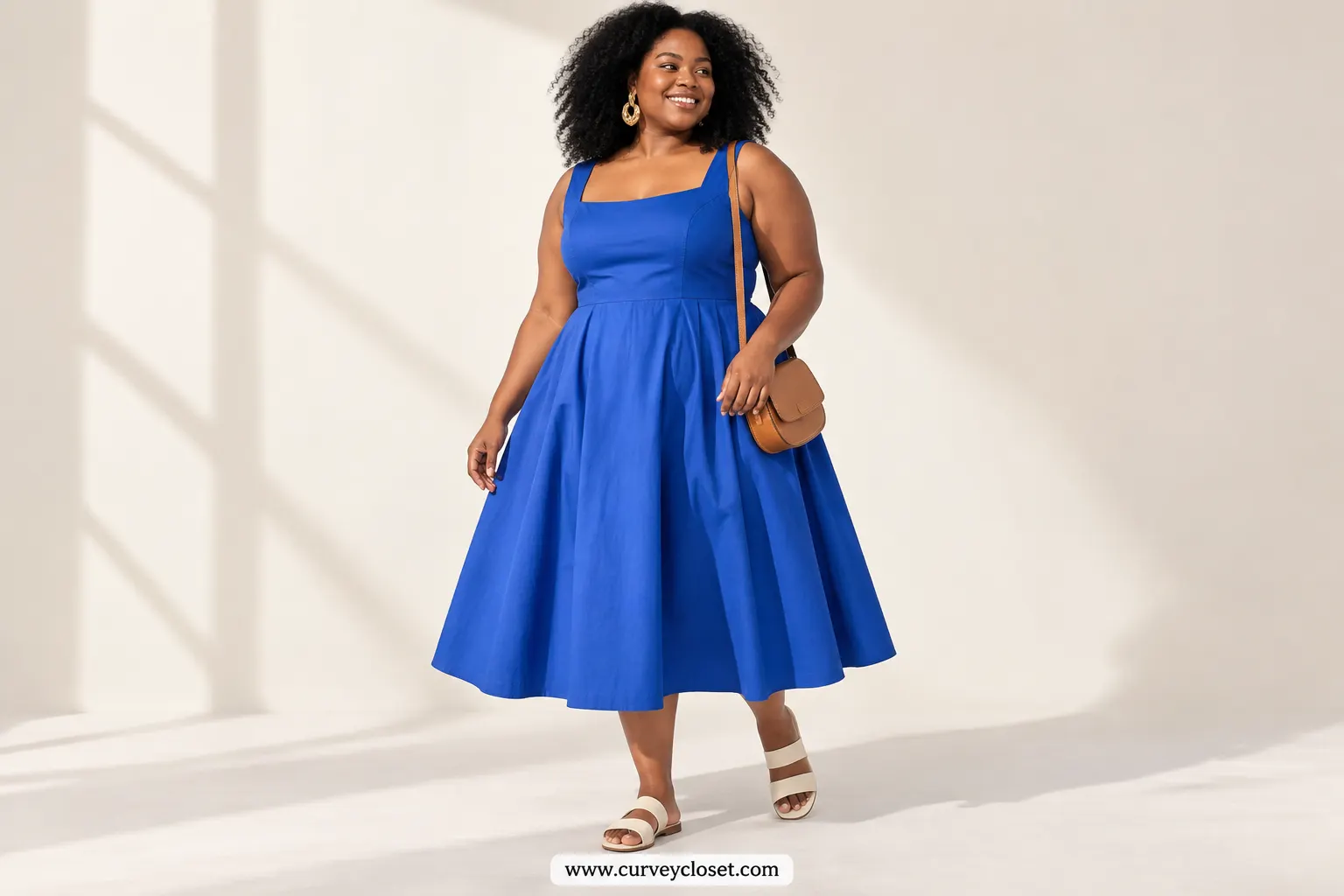
Great pear shape styling starts with clothes that give your body the space it needs—not rules about changing how it looks. If your hips need more room than your bust, finding a dress can mean checking two different fit points.
These seven ideas focus on generous skirts, comfortable bodices and useful construction details for plus-size wardrobes. Use the shape label only if it helps you shop: your measurements, movement and personal style matter more.
1.Start Pear Shape Styling with a Roomy A-Line Dress
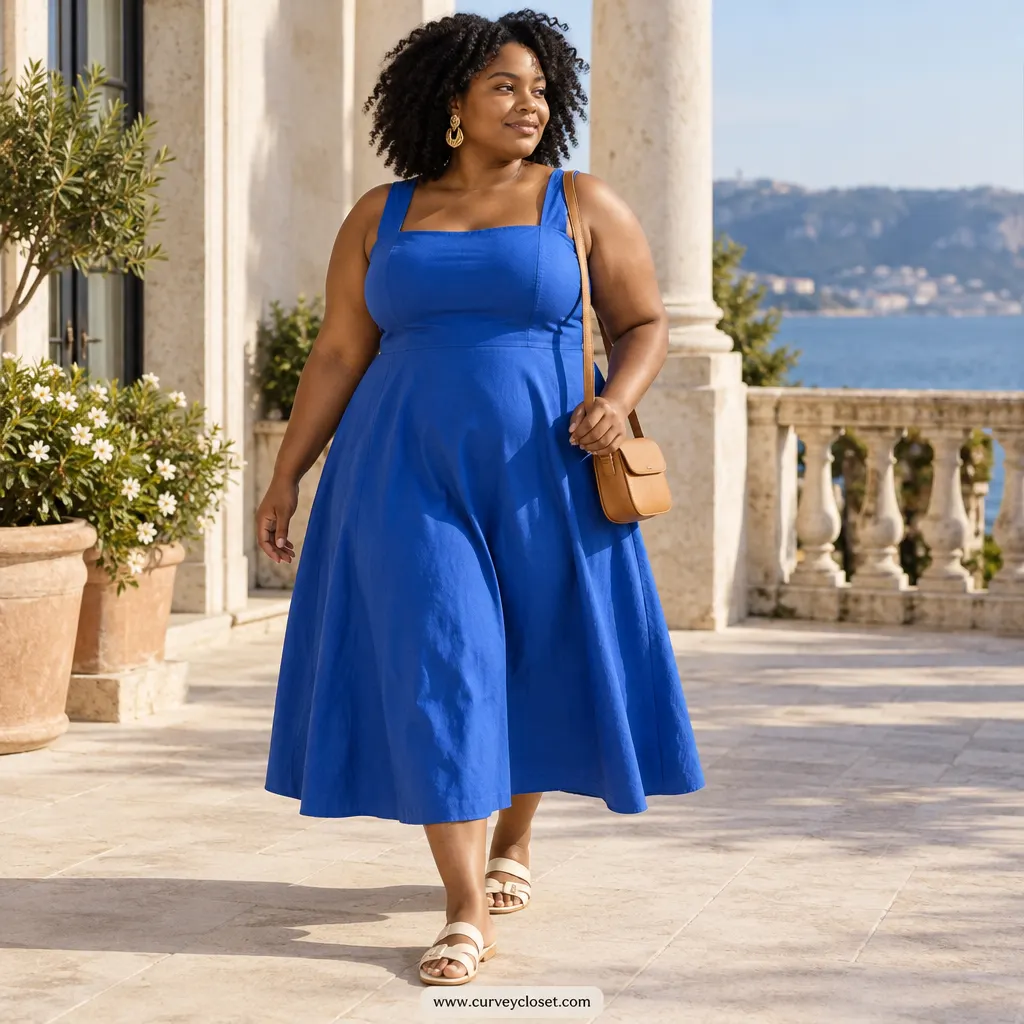
An A-line dress gives the skirt room to widen without requiring extra fabric at the shoulders. Look for a bodice that sits comfortably across your bust and a skirt that starts opening out above the fullest part of your hips. Cotton poplin offers crisp structure, while viscose twill falls more softly. During a try-on, sit down and take a long step: the skirt should move freely, and the waist seam should not press into your middle. Choose your neckline for comfort and personal preference.
How to wear it: Wear a square-neck A-line midi with flat sandals and a crossbody strap adjusted so the bag rests comfortably beside your hip.
2.Try Pear Shape Styling with an Adjustable Wrap
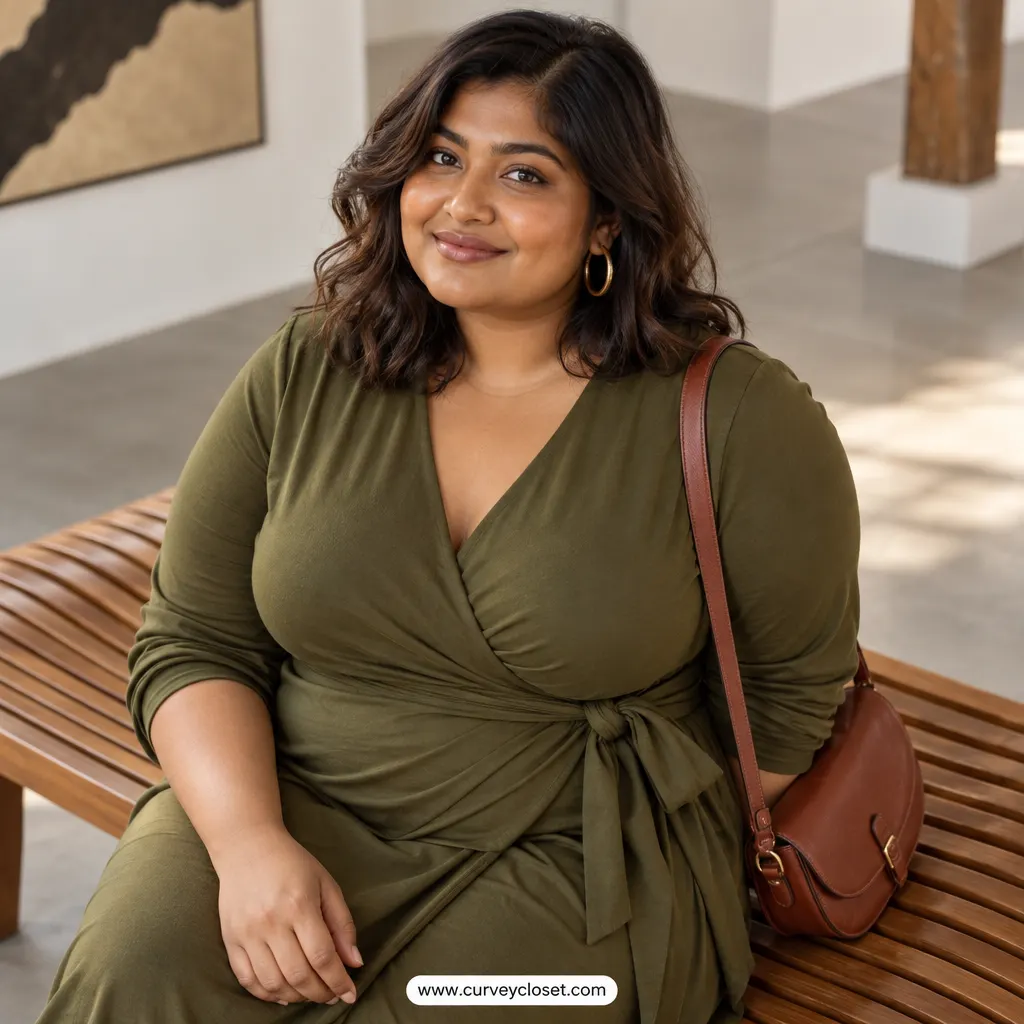
A wrap dress can accommodate different bust and hip measurements because the fastening lets you adjust the bodice. Check the skirt overlap carefully, though: a flexible waist does not automatically mean enough hip room. Look for a generous under-panel and test it while sitting and walking. A sewn-in neckline snap can help if you prefer more coverage, but it should not be holding a strained bodice together. Matte jersey with good recovery offers movement; a woven wrap needs enough ease throughout the skirt.
How to wear it: Tie the wrap where it feels comfortable, then pair the dress with ankle boots and a small saddle bag.
3.Choose a Shirred Bodice That Moves with You
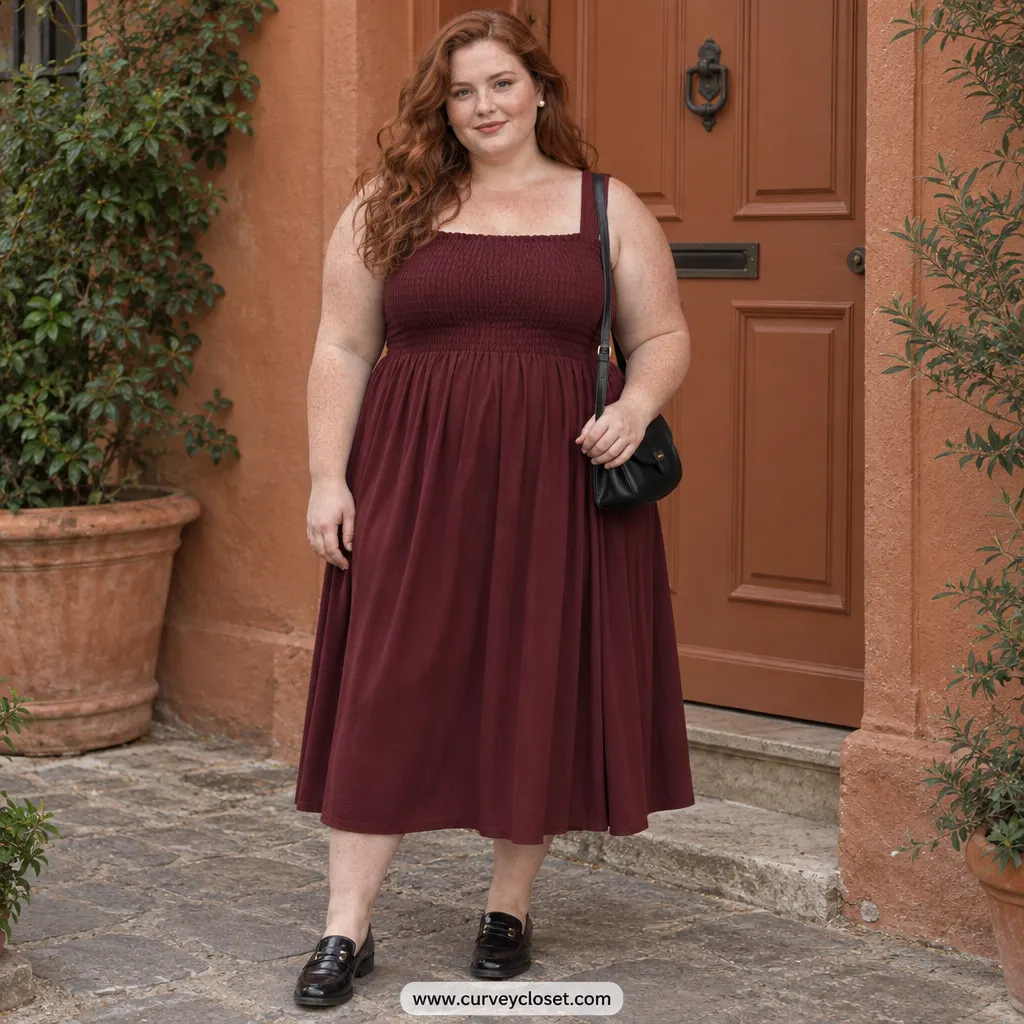
A shirred bodice offers stretch without asking a zip or button placket to do all the work. Choose a broad shirred panel with a softly gathered skirt, rather than a narrow elastic seam that digs in. Check that the elastic feels comfortable across your bust and ribs when you breathe deeply. The lining matters too: a stretchy outer bodice can still feel restrictive over a tight woven lining. Wide straps or sleeves give you options for bra coverage, while the gathered skirt supplies hip room.
How to wear it: Pair a wide-strap shirred midi with loafers, a compact shoulder bag and small earrings for an easy everyday outfit.
4.Look for Gathers Below a Comfortable Raised Seam
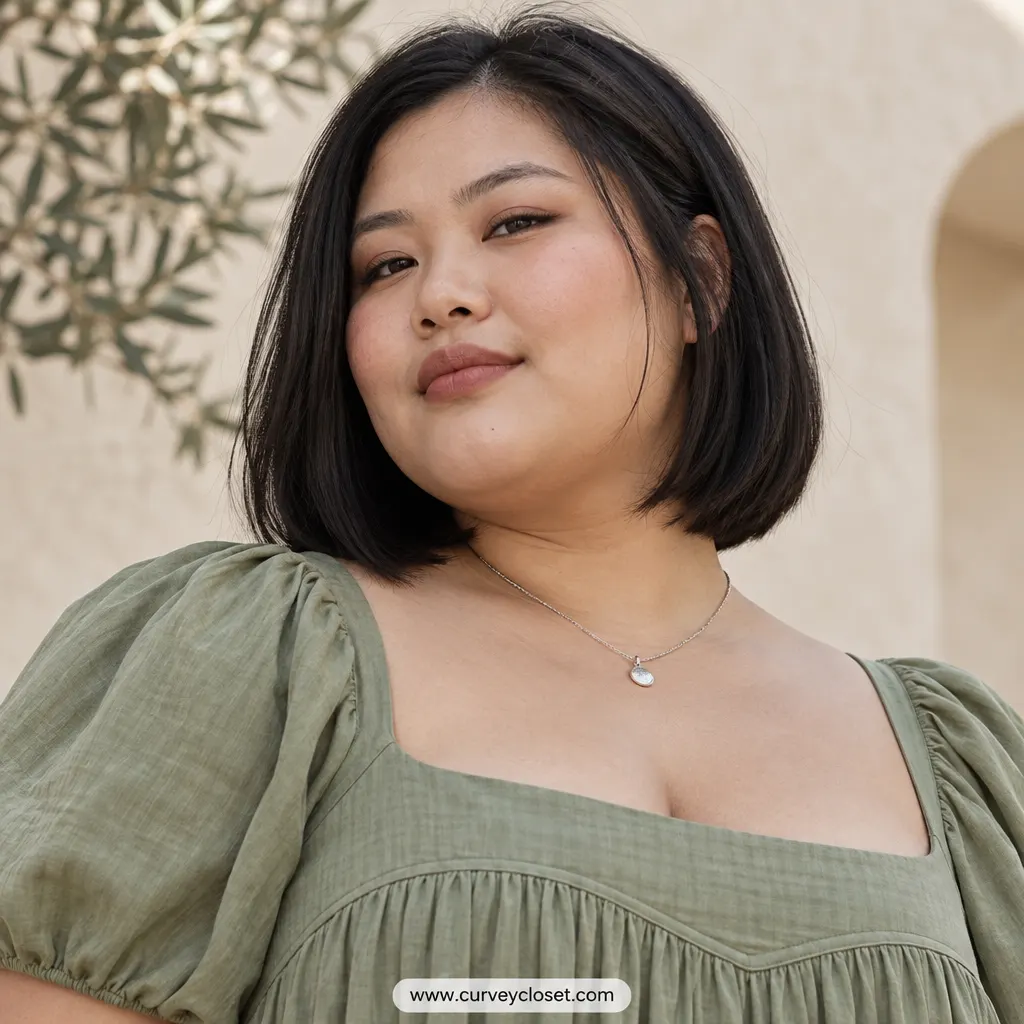
A raised waist seam can release the skirt before it reaches your hips, making this a useful option when standard waist seams sit awkwardly. The key is placement: the seam should sit below your bust without cutting across it or riding up. Look for enough bodice length and depth, especially if you have a fuller bust. Soft gathers in opaque viscose or cotton voile create movement without stiffness. Check that the lining has similar fullness, so it does not become the restrictive layer underneath.
How to wear it: Wear a raised-seam dress with low block-heel sandals and a short necklace that sits clear of the neckline.
5.Pick a Shirt Dress with a Properly Full Skirt

Not every shirt dress is cut straight. Seek out a version with a panelled or gathered skirt, plus a bodice that lets you reach forward without pulling across the back. Buttons should lie flat at both the bust and hips; opening a lower button is a styling choice, not a substitute for enough room. If you enjoy a waist tie, keep it loose enough for sitting. A cotton-linen blend feels relaxed, while a crisp cotton version brings more structure to workday outfits.
How to wear it: Style a full-skirt shirt dress with leather trainers and a structured handbag, leaving the removable belt off if you prefer.
6.Consider a Swing Dress with Space from the Upper Body

If you do not want a defined waist seam, a swing dress offers room through the middle and hips while keeping the shoulders intentional. Look for shaping at the bust, such as darts, rather than simply buying a larger straight-cut dress. Check armholes for rubbing or excess exposure, and make sure the hem allows your normal stride. A substantial cotton jersey or fluid woven crepe works well. Pockets are useful, but try them with your phone inside to see whether they pull the fabric.
How to wear it: Wear a knee-length swing dress with opaque tights and chunky loafers, keeping the neckline clear for statement earrings.
7.Fit the Hips First, Then Fine-Tune the Bodice
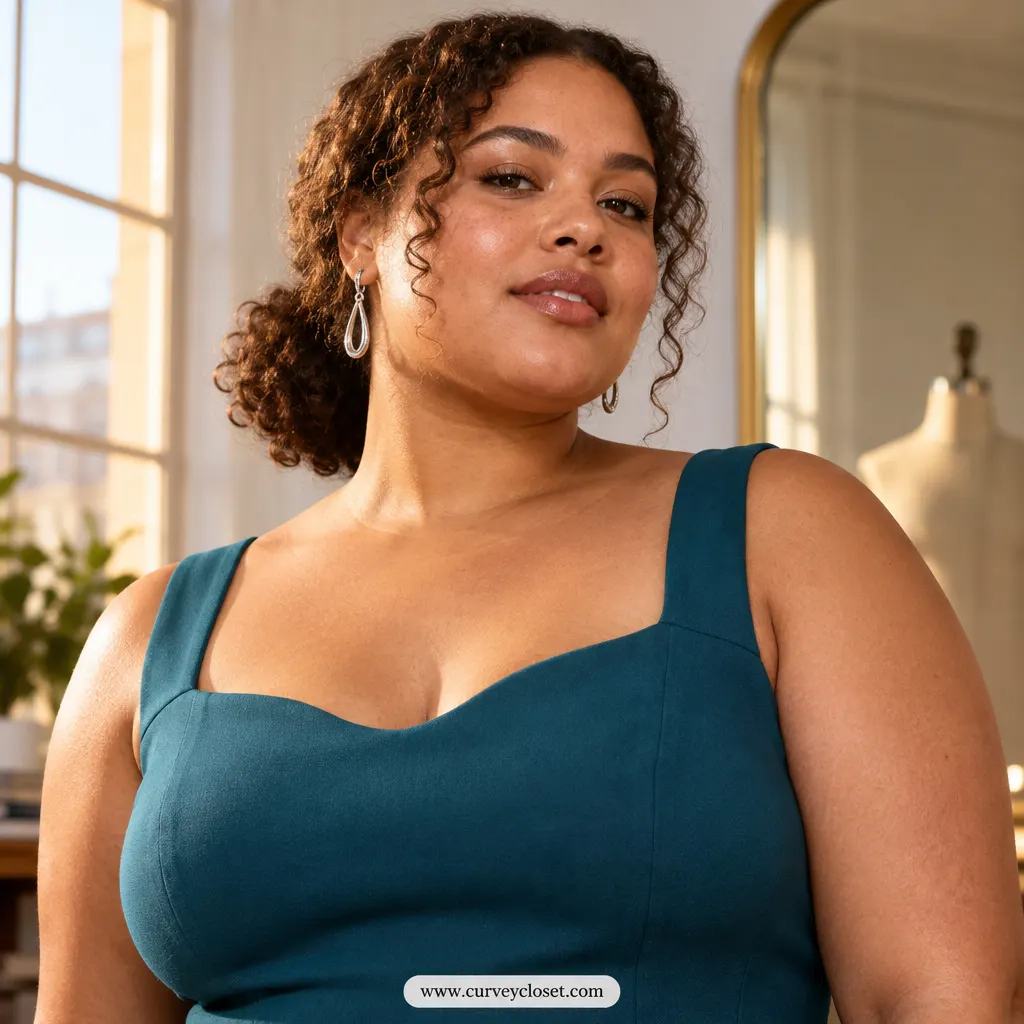
When a dress fits your hips beautifully but feels loose above, a small alteration may be more useful than changing size. Compare your bust, waist and hip measurements with the specific size chart, then check the garment's cut and fabric stretch. A tailor may be able to shorten straps or adjust a simple bodice, though armholes, sleeves and complex seams can make changes harder. Ask for an assessment before committing, and check the return policy. Keep enough bodice ease to breathe, reach and sit comfortably.
How to wear it: Bring your intended bra and shoes to an alteration fitting so the bodice position and finished hem reflect how you will wear the dress.
The takeaway
The best dress is one you can sit, reach and walk in comfortably. Start with room through your hips, then check the shoulders, bust and armholes separately. Adjustable details and thoughtful alterations can help bridge different size needs—without asking your body to change.
Get outfit ideas from your own closet
Curvy Closet picks a daily outfit from the clothes you already own.
Learn moreShare counts include shares made with the buttons on this page. Images are AI-generated illustrations.