7 Paired Do’s & Don’ts for Comfortable Heels
29 October 2026 · 4 min read · 7 ideas
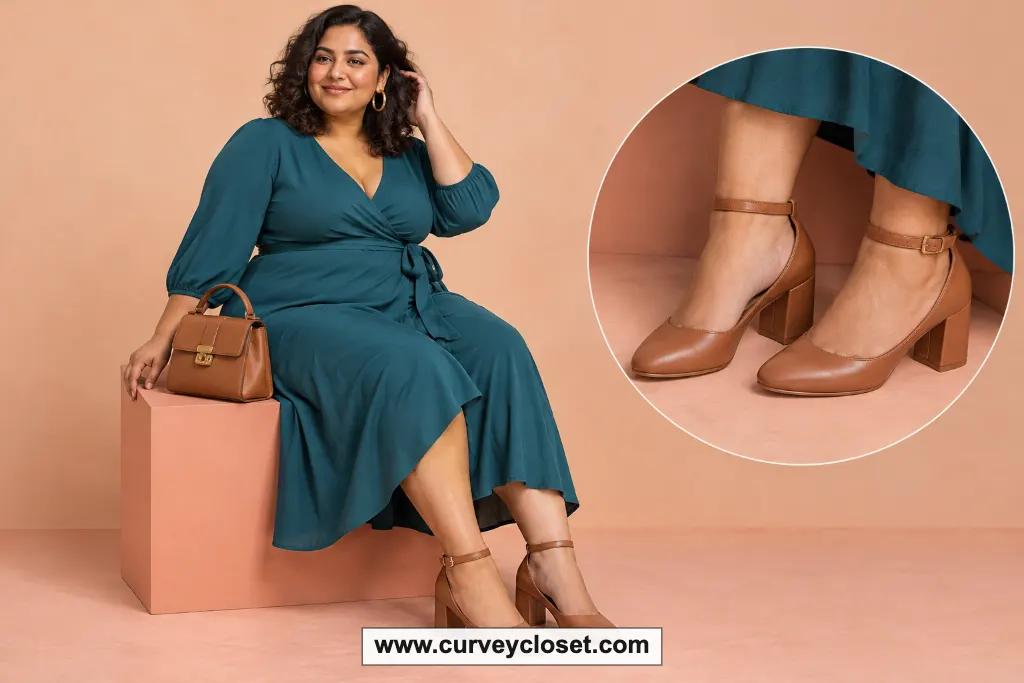
Comfortable heels start with space for your toes, straps that stay secure without digging, and support where your feet actually need it. You deserve shoes that work with your day—not a day organised around sore feet.
These seven paired do’s and don’ts make shopping, fitting and styling more straightforward. Each comparison changes one practical detail, so you can see what to check without changing your personal style.
1.Give comfortable heels enough toe room
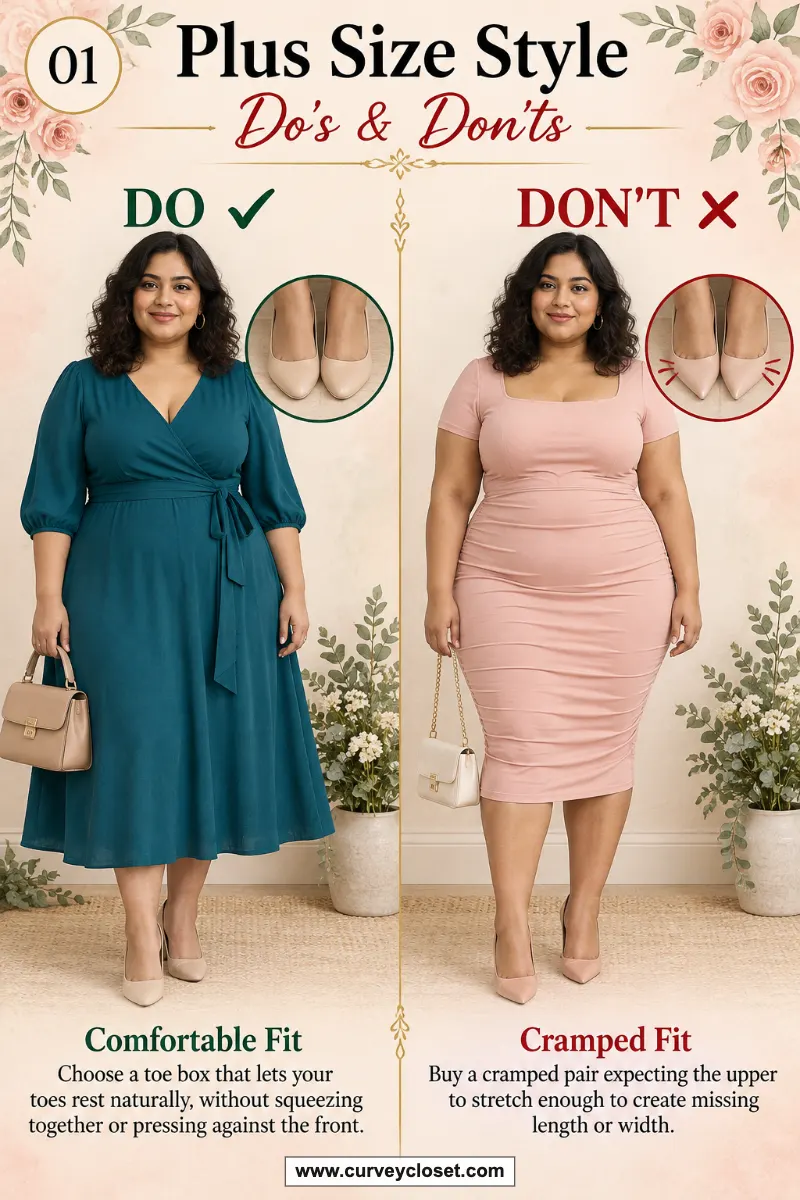
Do: Choose a toe box that lets your toes rest naturally, without squeezing together or pressing against the front. Don't: Buy a cramped pair expecting the upper to stretch enough to create missing length or width. A pointed silhouette can still work if its tapered section extends beyond your toes rather than compressing them. Try both shoes with the hosiery you plan to wear, stand up, and walk. If the front pinches immediately, compare a wider fitting or a different last instead of accepting discomfort.
How to wear it: Wear almond-toe block heels with a teal midi dress, checking that your toes can move before leaving home.
2.Adjust straps for comfortable heels
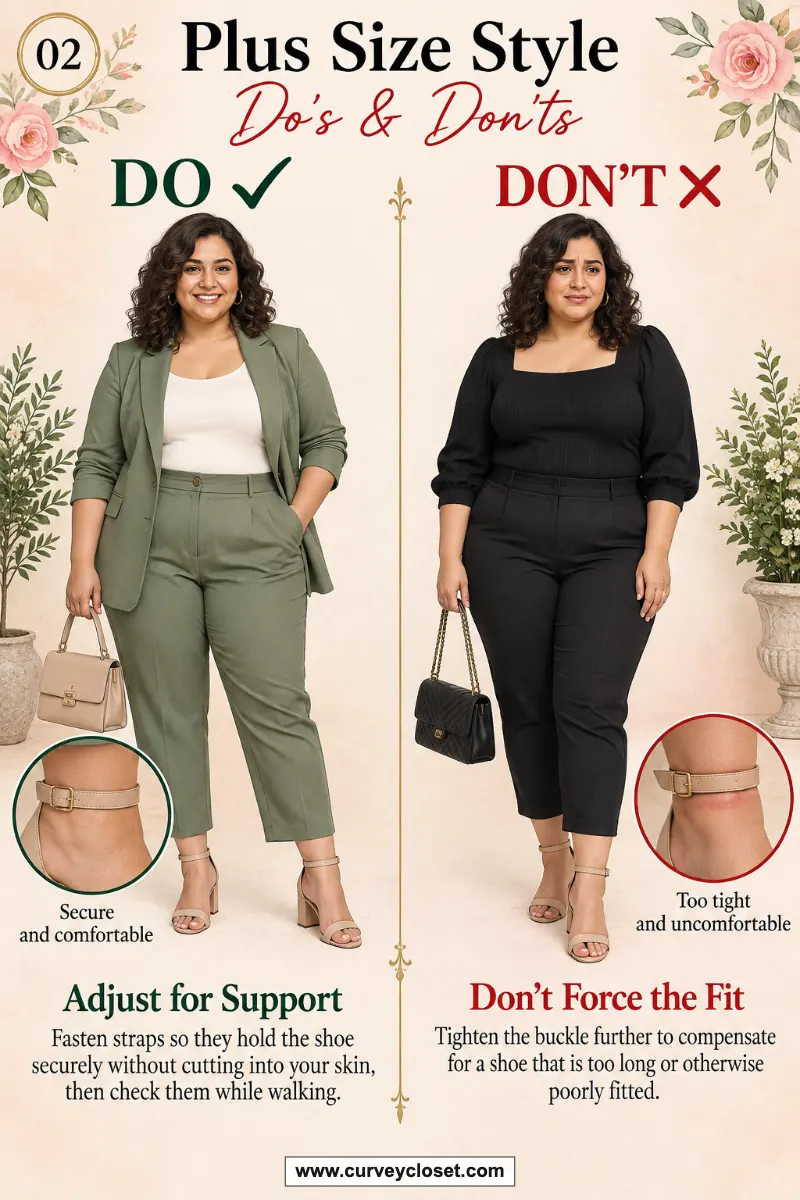
Do: Fasten straps so they hold the shoe securely without cutting into your skin, then check them while walking. Don't: Tighten the buckle further to compensate for a shoe that is too long or otherwise poorly fitted. Your heel should feel held, but the strap should not leave a deep groove or cause tingling. Look for useful buckle positions and a strap placement that suits your foot. If no setting feels secure and comfortable together, try another fit rather than forcing the fastening.
How to wear it: Pair ankle-strap heels with cropped trousers so you can easily check and adjust the fastening before heading out.
3.Check cushioning without crowding your shoes
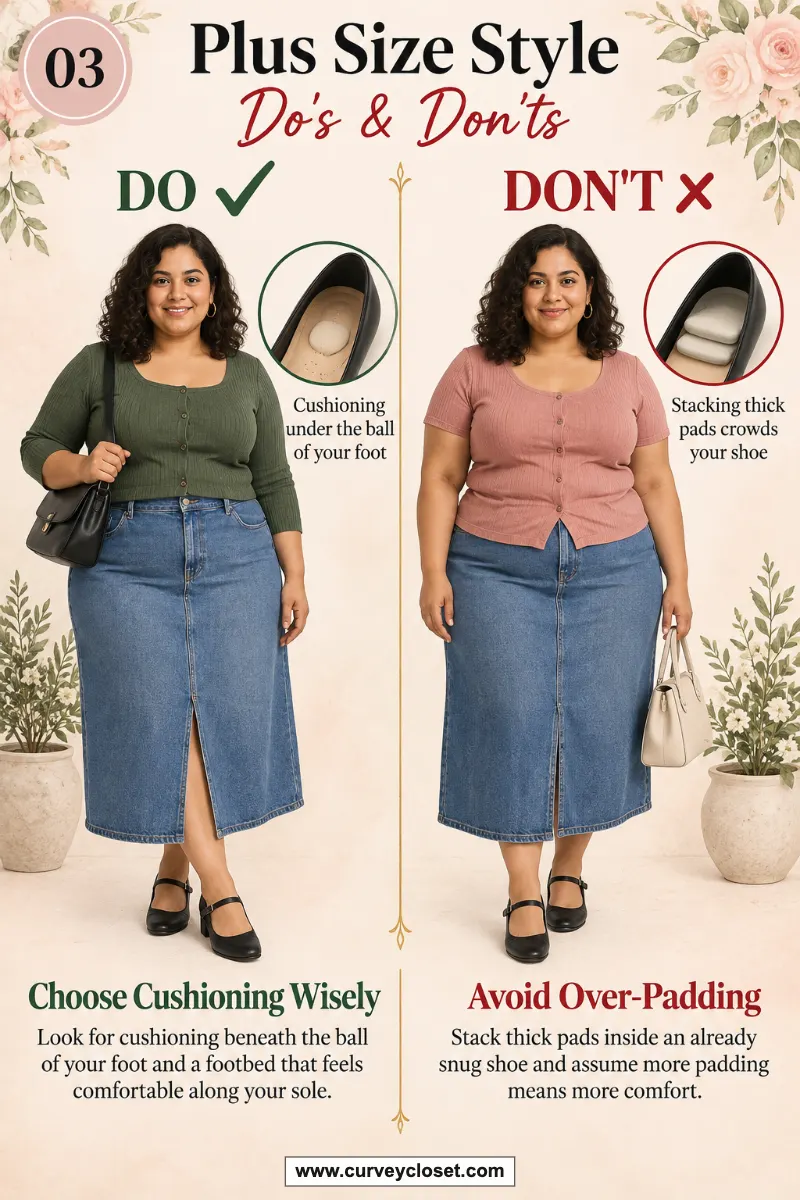
Do: Look for cushioning beneath the ball of your foot and a footbed that feels comfortable along your sole. Don't: Stack thick pads inside an already snug shoe and assume more padding means more comfort. Extra layers take up room and can push your toes against the upper or lift your heel out of position. Test any insert inside the actual shoes before committing to it. A smooth, securely placed pad may help, but it cannot turn the wrong shoe shape into the right fit.
How to wear it: Style cushioned Mary Janes with a denim midi skirt, and recheck toe room after adding any removable insert.
4.Match heel stability to your walking route
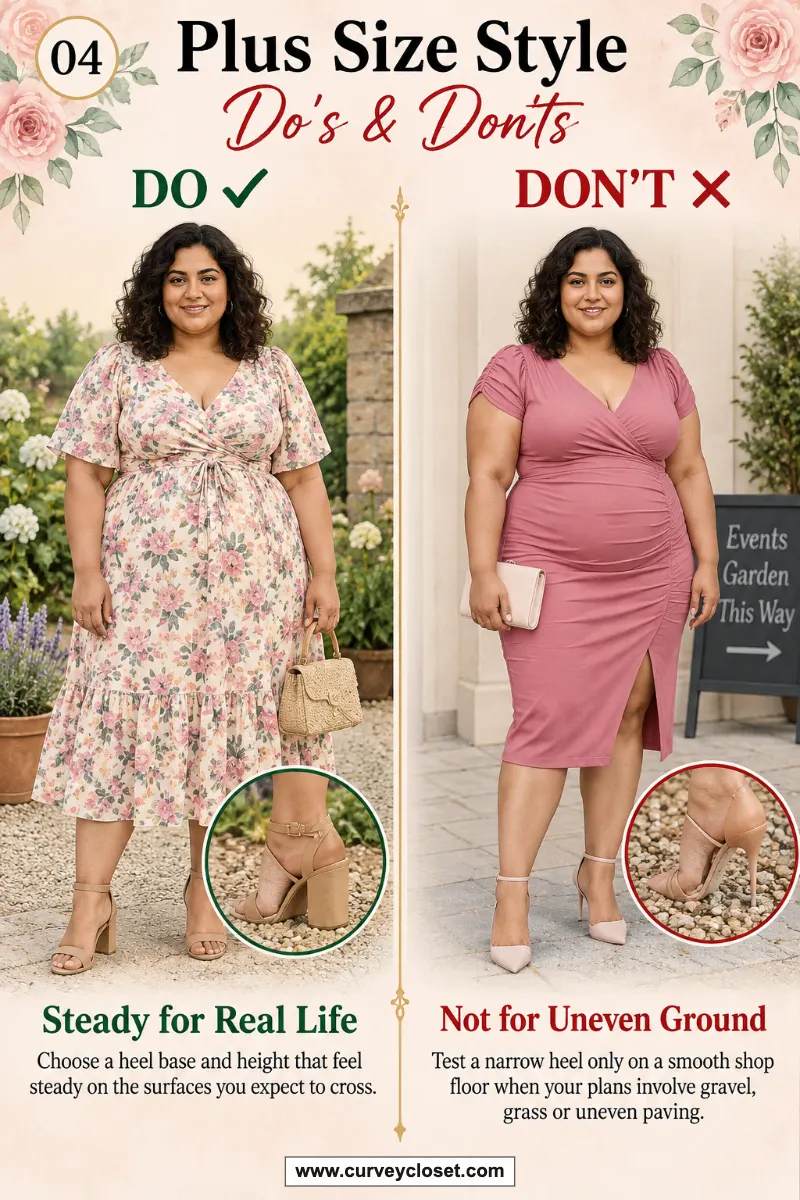
Do: Choose a heel base and height that feel steady on the surfaces you expect to cross. Don't: Test a narrow heel only on a smooth shop floor when your plans involve gravel, grass or uneven paving. A broader block heel often offers a more practical contact area outdoors, while a narrow heel may suit an indoor occasion. Neither is a style rule for your body. Walk, turn and pause in the shoes; if you feel yourself constantly correcting your balance, choose another option.
How to wear it: For a garden event, wear broad block heels with a floral midi dress and test them on a similar surface first.
5.Test the lining and edges for rubbing
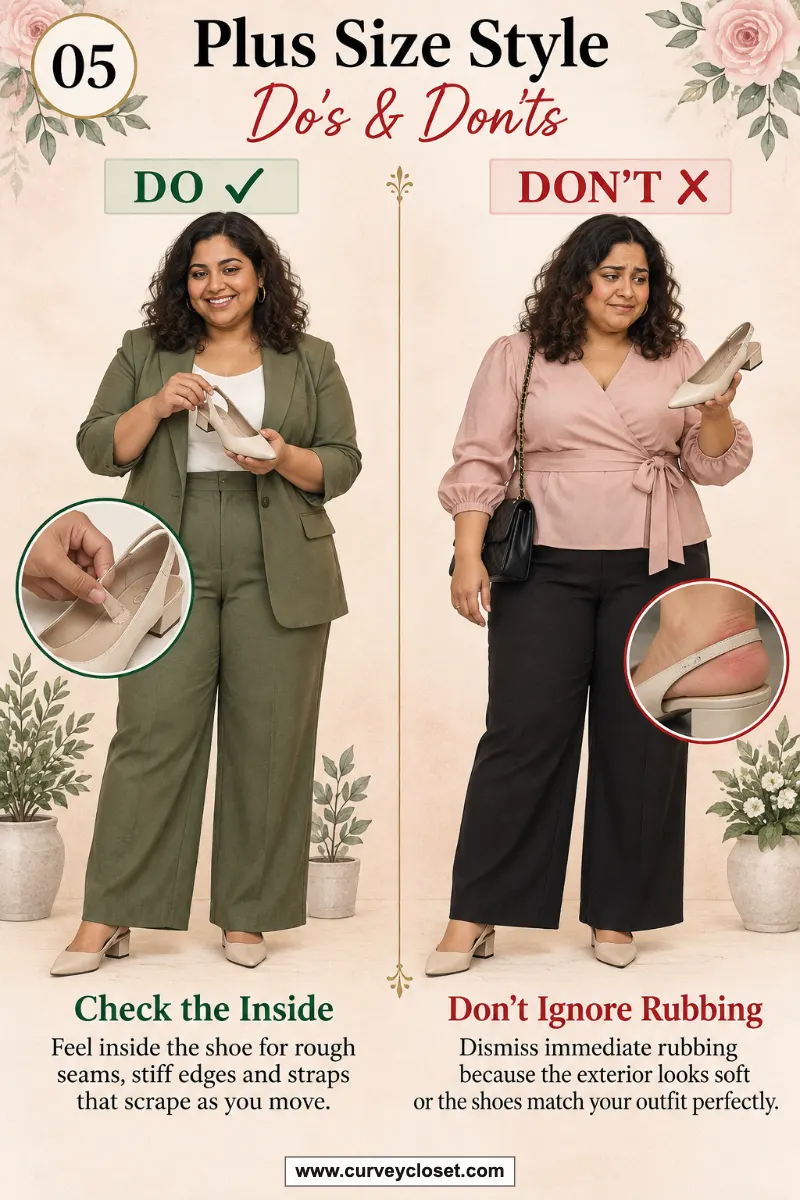
Do: Feel inside the shoe for rough seams, stiff edges and straps that scrape as you move. Don't: Dismiss immediate rubbing because the exterior looks soft or the shoes match your outfit perfectly. Comfort depends on the surfaces touching your feet, not just the outer material. Walk long enough to notice repeated friction at the heel, toes and strap edges. A smooth lining and flexible contact points are useful starting checks. Stop if rubbing begins rather than using a special occasion as your first proper test.
How to wear it: Wear slingbacks with fluid tailored trousers, checking the back strap against your skin during a short indoor walk.
6.Try both shoes and check heel hold
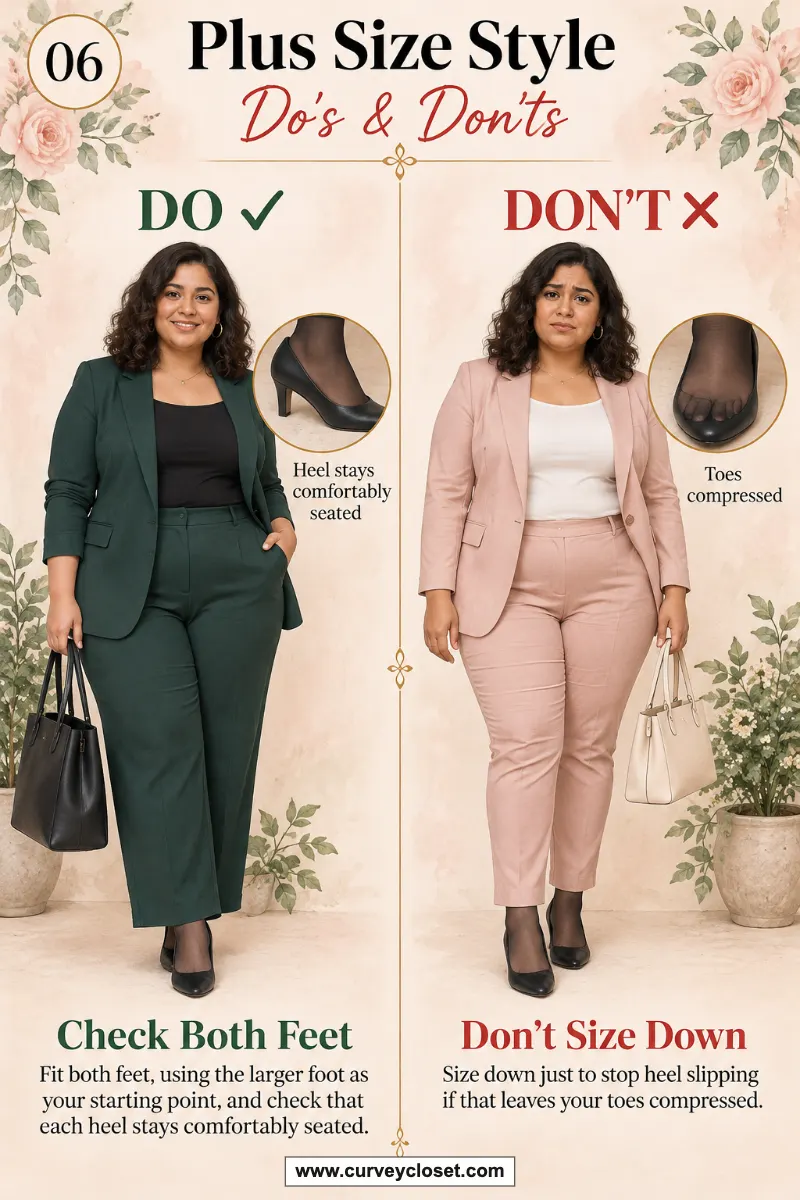
Do: Fit both feet, using the larger foot as your starting point, and check that each heel stays comfortably seated. Don't: Size down just to stop heel slipping if that leaves your toes compressed. Feet can differ in size, and sizing varies between shoe shapes. Try shoes later in the day if your feet tend to swell, wearing your intended socks or tights. When the front fits but the back slips, explore another last or an adjustable fastening rather than trading one fit problem for another.
How to wear it: Try pumps with your planned tights and a trouser suit, walking several lengths of the room before deciding.
7.Maintain heel tips and sole grip
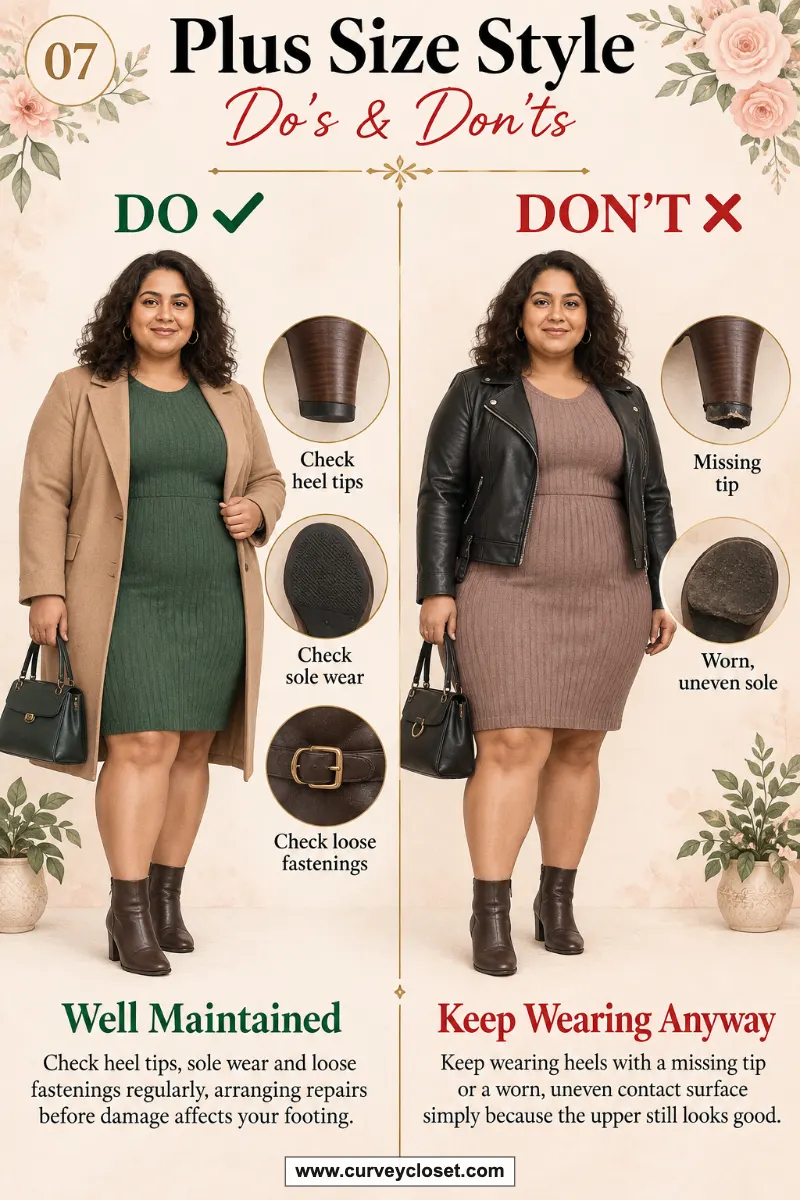
Do: Check heel tips, sole wear and loose fastenings regularly, arranging repairs before damage affects your footing. Don't: Keep wearing heels with a missing tip or a worn, uneven contact surface simply because the upper still looks good. Underfoot comfort also depends on the condition of the shoe. A repair professional can assess replacement tips and suitable sole treatments; not every shoe needs the same fix. Let damp shoes dry naturally away from direct heat, and store pairs so straps and heel counters retain their shape.
How to wear it: Before wearing heeled ankle boots with a knit dress, inspect both heel tips and pack a comfortable backup pair.
The takeaway
Start with toe room, then check strap fit, stability and cushioning while walking. Keep the styles you love, but pass on any fit that causes pain, numbness or rubbing. A lower pair or a change of shoes is always a useful option—not a styling defeat.
Get outfit ideas from your own closet
Curvy Closet picks a daily outfit from the clothes you already own.
Learn moreShare counts include shares made with the buttons on this page. Images are AI-generated illustrations.