7 Plus-Size Interview Outfit Ideas for Seated Comfort
22 October 2026 · 4 min read · 7 ideas
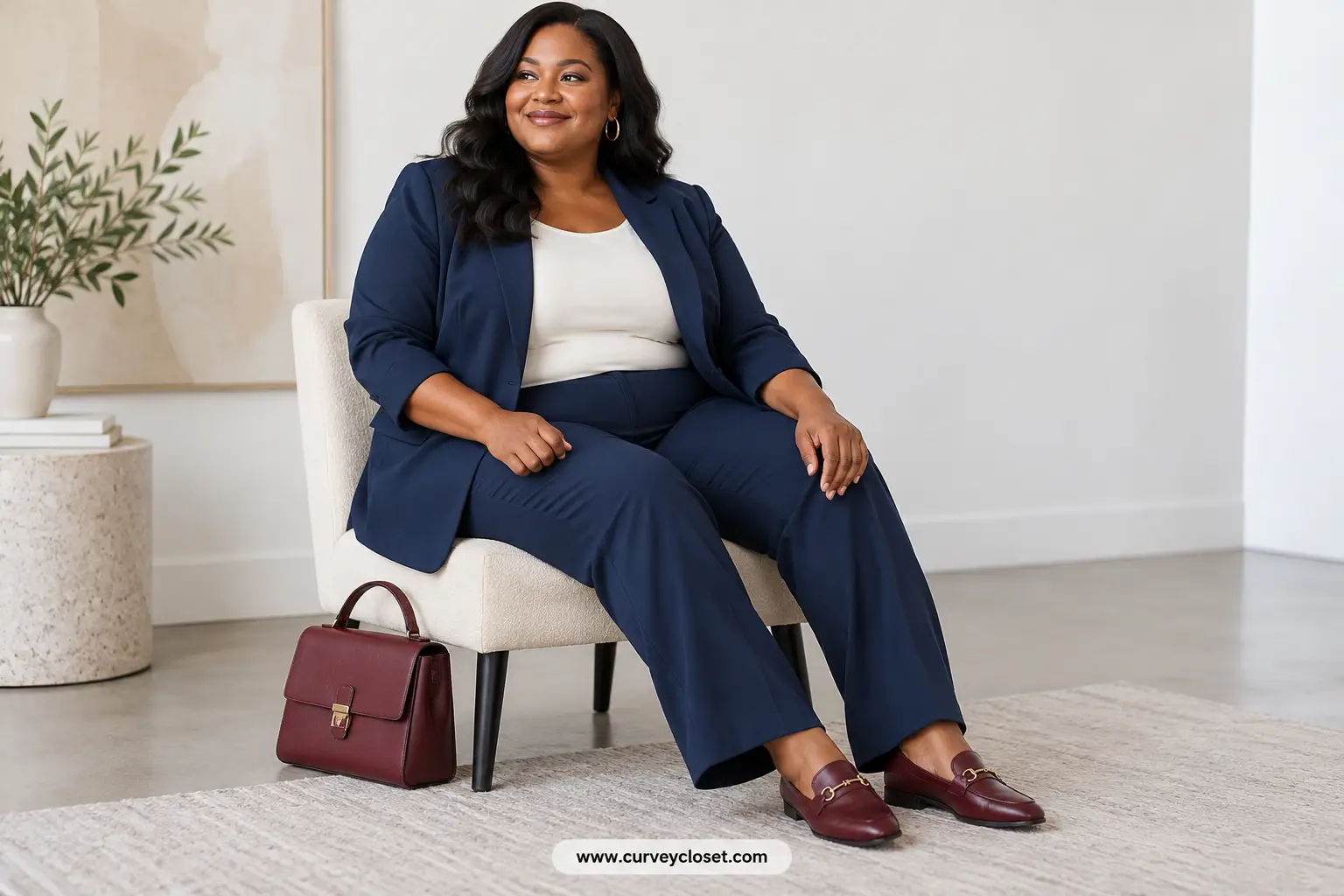
A great interview outfit should feel good when you sit down—not just when you check the mirror. For plus-size bodies, comfortable waistbands, room through the hips and thighs, and sleeves that let you reach can make all the difference.
These seven looks balance professional polish with practical seated comfort. Choose the level of formality that suits your workplace, then give your outfit a chair test before the day.
1.A stretch suit makes a dependable interview outfit
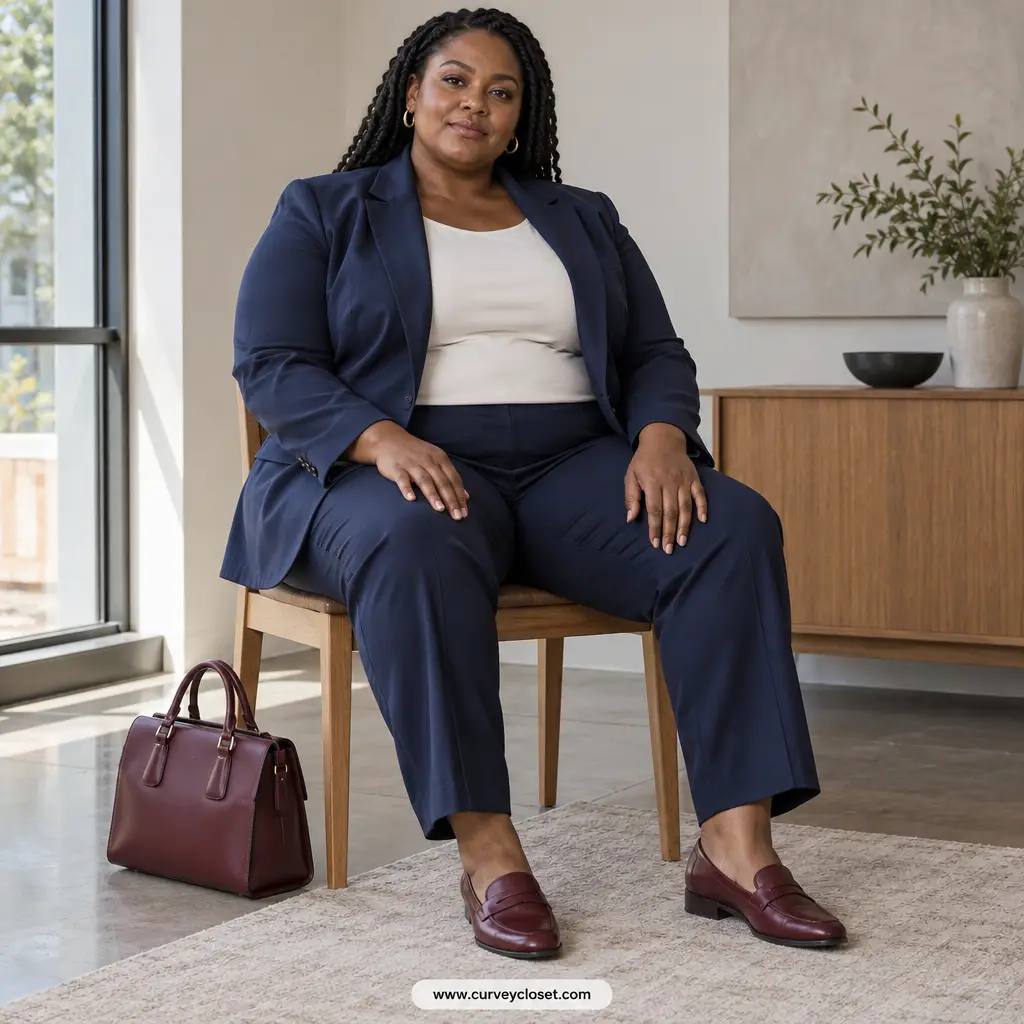
For a formal interview, start with straight-leg trousers and a single-breasted blazer in stretch crepe. Look for a waistband with discreet side or back elastic, plus enough room through the rise that it does not pull when you sit. An opaque jersey shell keeps the layers smooth without the stiffness of a shirt. Wear the blazer open while seated if that feels easier. During your chair test, check that the trouser pockets stay comfortable and the jacket sleeves allow you to reach forward.
How to wear it: Try the suit seated for ten minutes with your interview shoes on, checking the waistband, rise and knees.
2.Build an interview outfit around a ponte dress
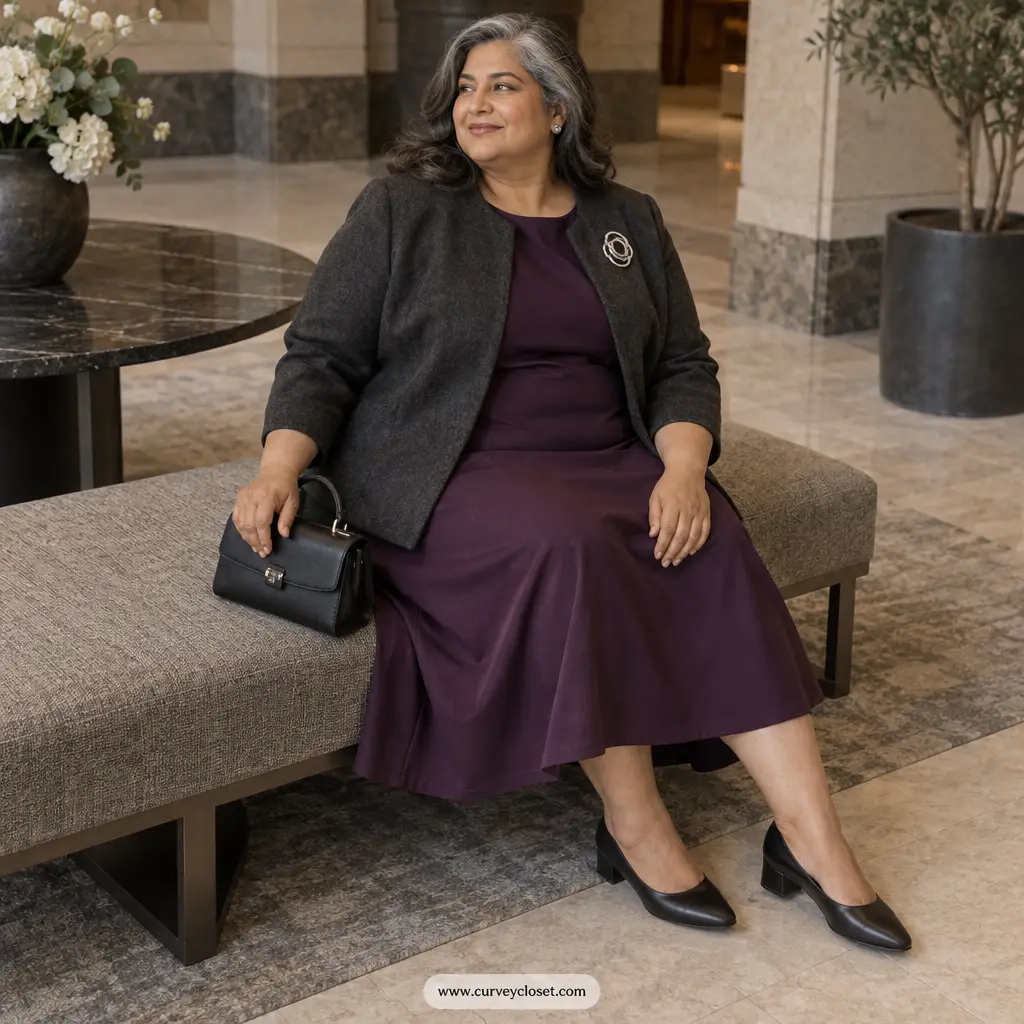
A substantial ponte dress offers stretch with a more structured finish than a thin jersey dress. Choose a gently A-line or straight silhouette that gives your belly and hips room, with a hem that remains comfortable when seated. Elbow-length sleeves can simplify layering, while a collarless jacket adds formality without bulky lapels. Check the neckline as you lean forward and the skirt as you sit. If the fabric climbs or needs repeated tugging, try a different cut or size rather than relying on stretch alone.
How to wear it: Sit in the dress before choosing its length, then pair it with low block heels or polished flats.
3.Pair wide-leg trousers with a fluid blouse
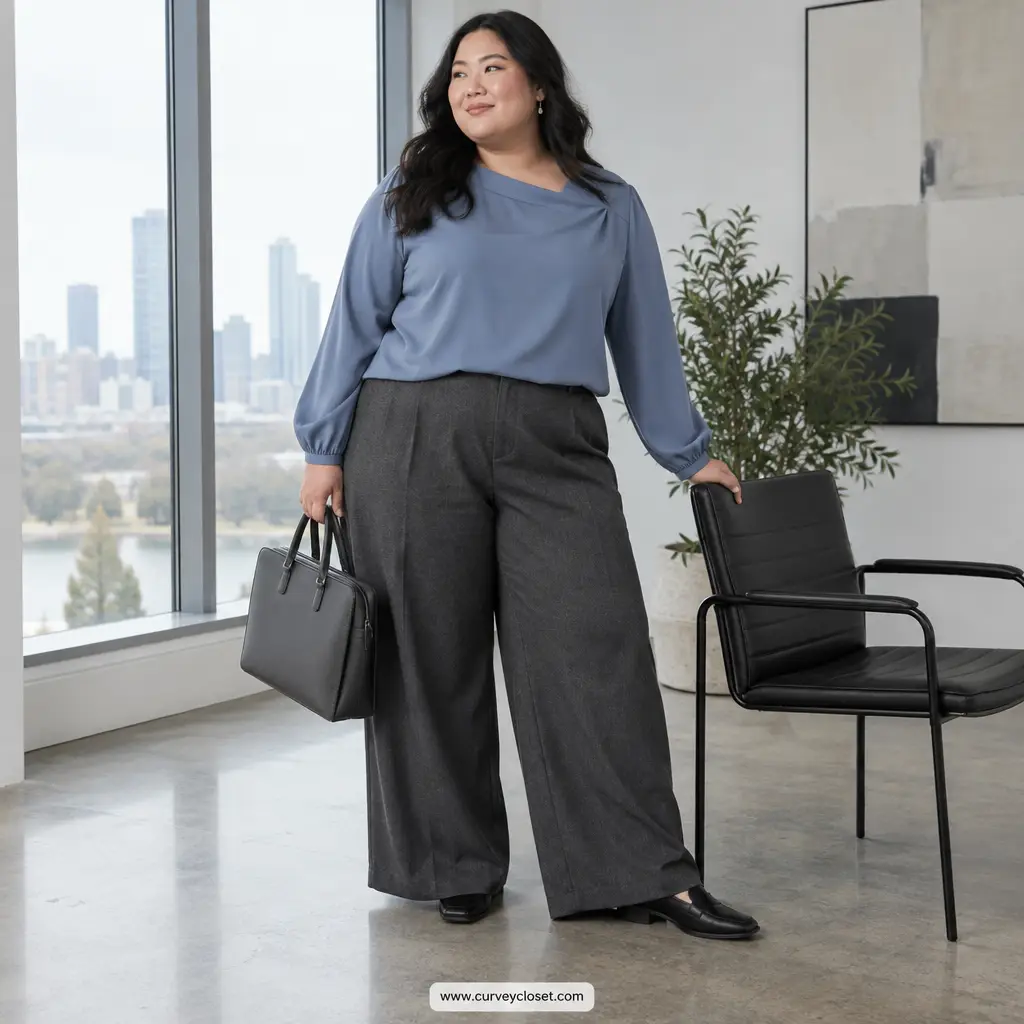
Wide-leg trousers can provide generous seated space through the thighs without looking casual. Choose a drapey woven fabric and a flat-front waistband with an elasticated back. Pair them with an opaque crepe blouse that has enough ease across the bust and upper arms; a button-free neckline removes one potential source of gaping. A clean untucked hem works well if it finishes where you like it. For a more formal setting, add a matching blazer, and check that the trouser hems clear the floor.
How to wear it: Choose a blouse hem that lies comfortably over the waistband when seated, rather than forcing a full tuck.
4.Choose a softly structured knit jacket
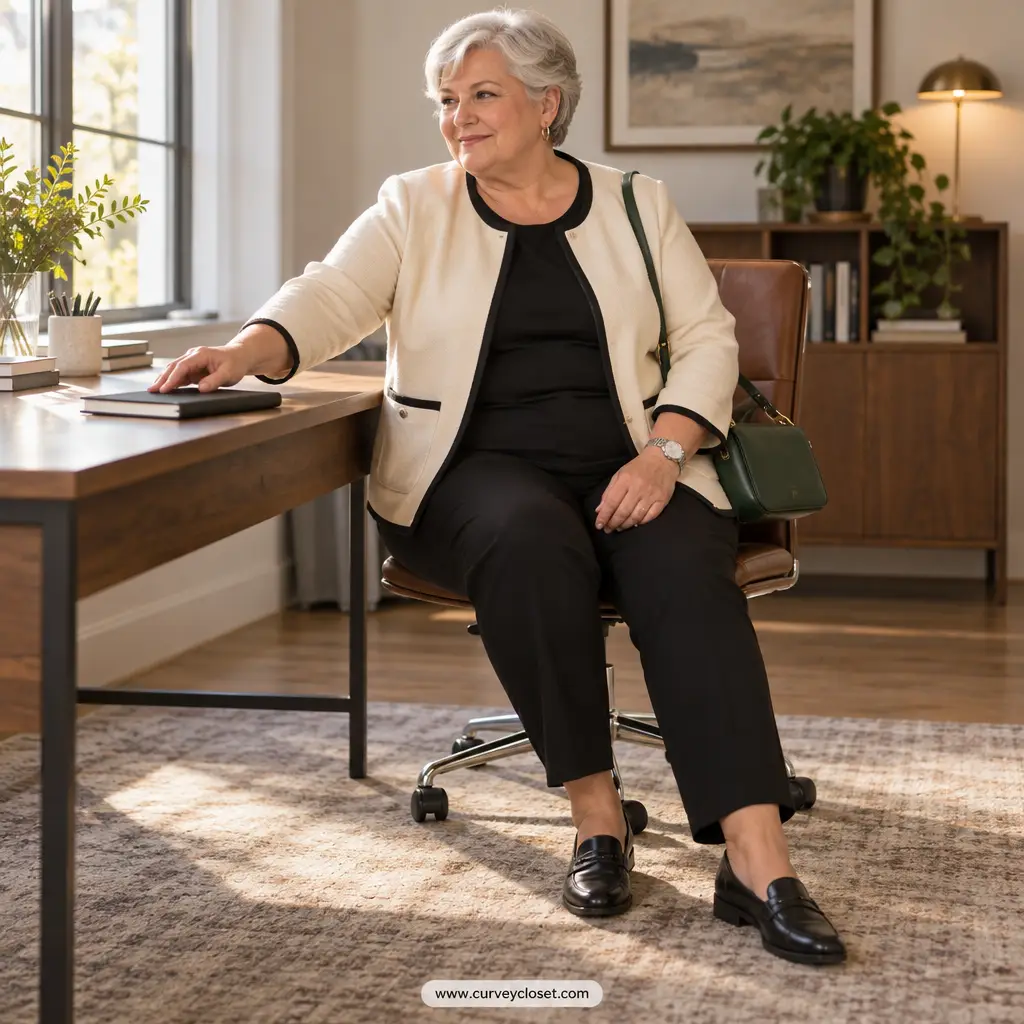
For a business-casual interview, a knit jacket can give you the outline of tailoring with more movement across the back and elbows. Look for a dense, opaque knit that holds its shape, then pair it with tailored stretch trousers and a simple shell. Keep the jacket open so its front edges do not press into your lap. Full-length tapered trousers should still have room at the knee when bent. This combination is especially useful if rigid blazer sleeves distract you while writing or using a laptop.
How to wear it: Reach both arms forward while wearing the jacket to check that the shoulders and upper sleeves move comfortably.
5.Try a midi skirt with a fine-gauge knit
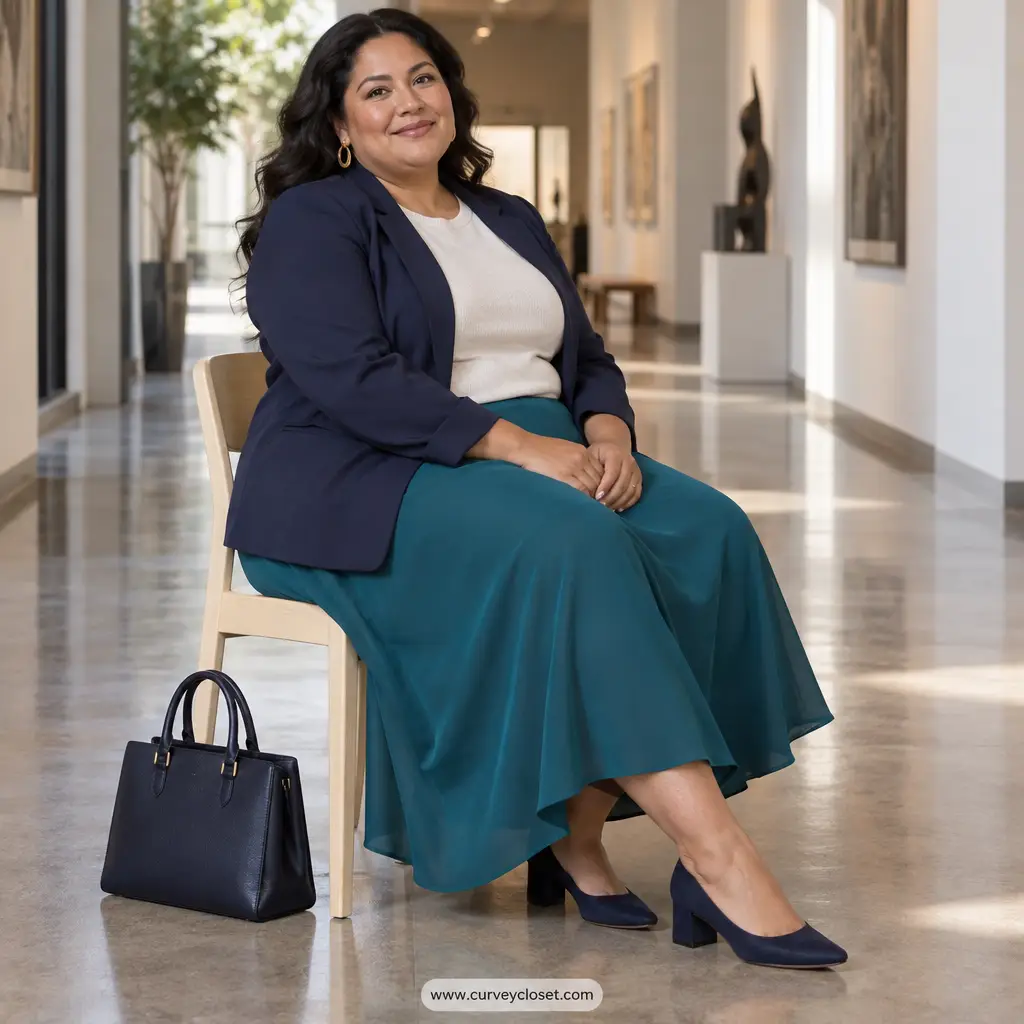
A gently A-line midi skirt leaves room for your thighs and can feel easier than a narrow pencil skirt during a long seated conversation. Look for a soft waistband and an opaque fabric that drapes rather than clings. If it has a lining, check that the lining also allows you to sit and move freely. Add a fine-gauge knit with a tidy neckline and a hip-length jacket for structure. Test the waistband sitting upright and leaning forward, since comfort can change between those positions.
How to wear it: Wear the knit untucked or lightly tucked only if the waistband stays comfortable in both seated positions.
6.Use a roomy shirt and pull-on tailored trousers
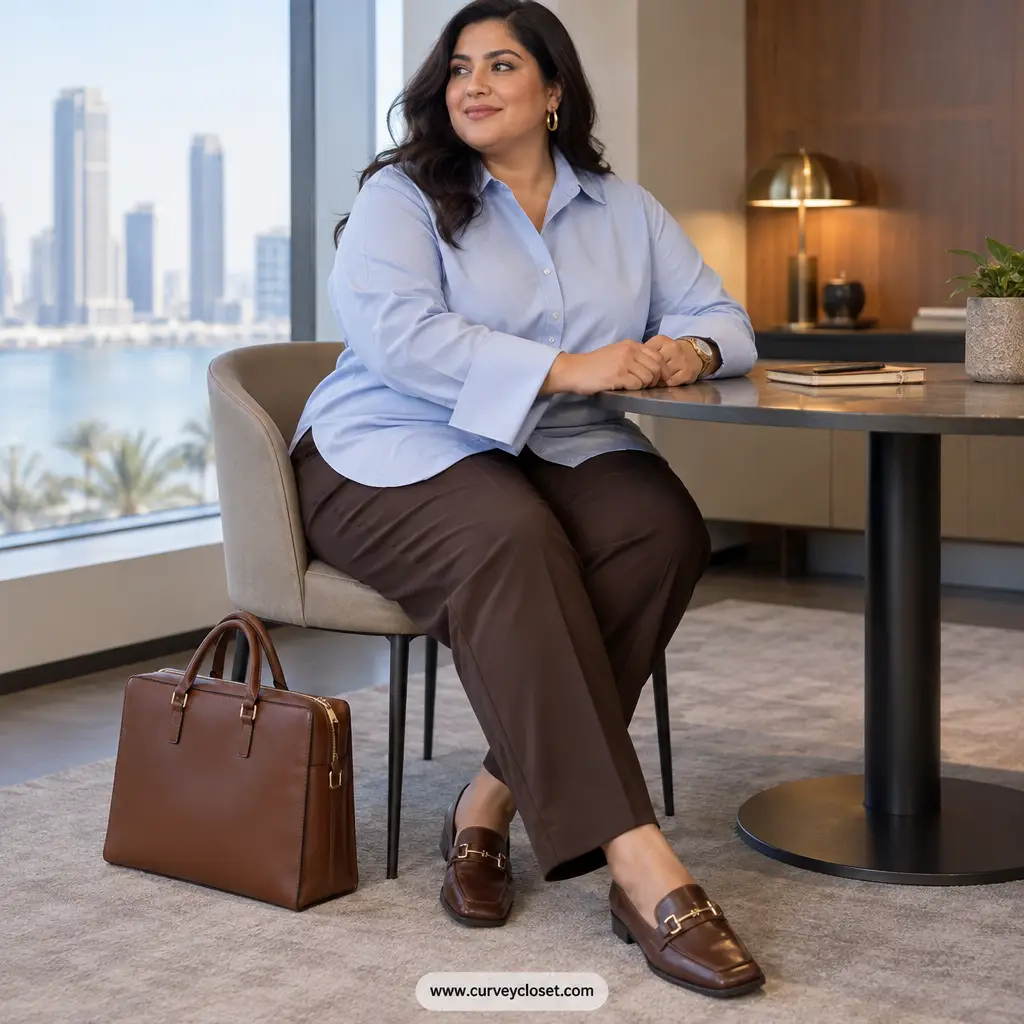
A crisp shirt works best when it has room across your bust, belly and upper arms in a seated position. Choose opaque cotton with some stretch, or a soft cotton blend, and check the spaces between buttons while reaching forward. Pair it with pull-on tailored trousers in substantial stretch fabric; a smooth waistband can be comfortable without looking like loungewear. Wear the shirt untucked with a neat curved hem for a business-casual setting. Add a blazer if the employer's dress code calls for more structure.
How to wear it: Check the shirt from the front and side while seated, and try another cut if the button placket pulls.
7.Make a tonal trouser look work on camera
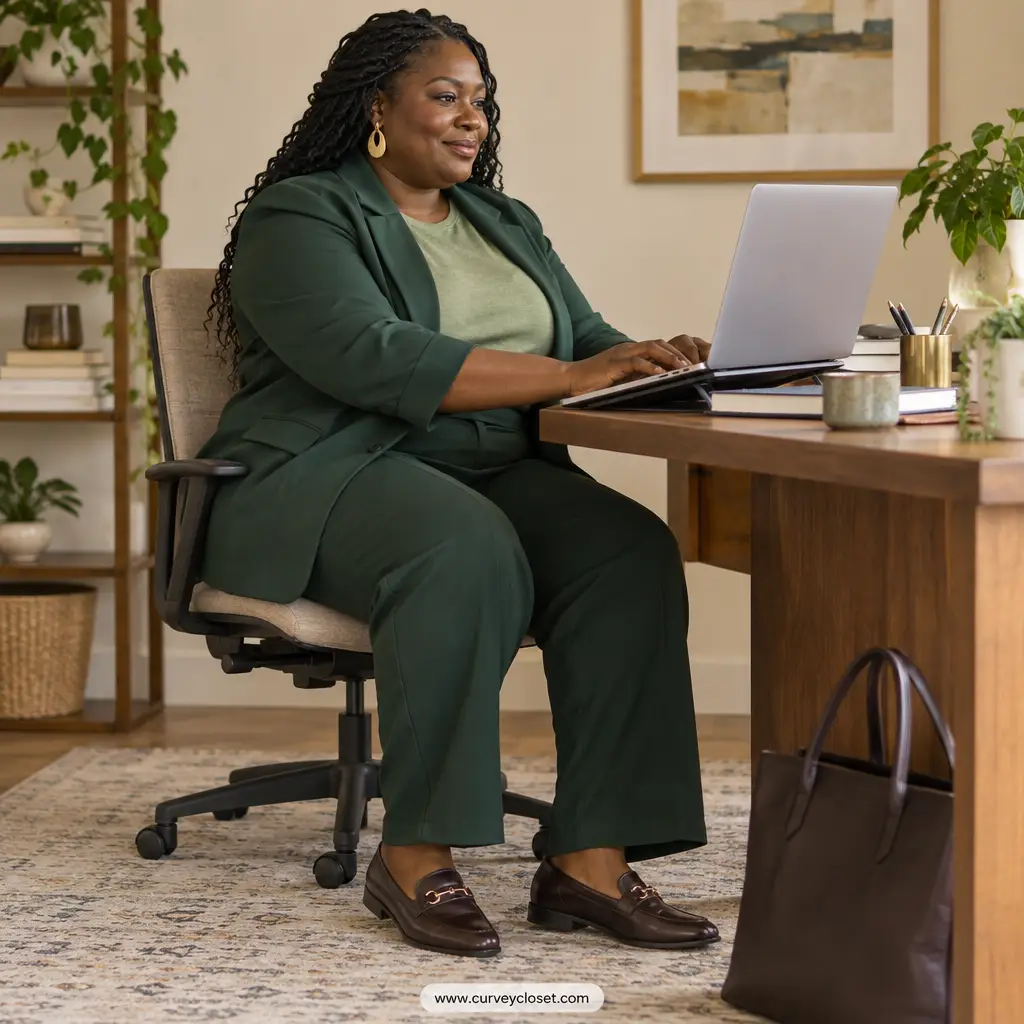
For a video interview, dress for the whole appointment rather than only the visible neckline. Tonal stretch trousers and a soft, opaque knit create an intentional outfit that stays comfortable in your desk chair. Add an unstructured blazer in a related shade, choosing a colour that separates clearly from your background. Avoid relying on tiny patterns, which can look distracting on camera. Set up a practice call to check the neckline, shoulder fit and jewellery, then stand and sit again to make sure nothing needs constant adjusting.
How to wear it: Test the complete look in your actual desk chair with the camera at eye level and your feet supported.
The takeaway
The best interview outfit lets you focus on the conversation rather than adjusting your clothes. Before the day, sit, reach forward and cross or uncross your ankles in the complete look. If something pinches, pulls or needs constant rearranging, change the fit or fabric—not your body.
Get outfit ideas from your own closet
Curvy Closet picks a daily outfit from the clothes you already own.
Learn moreShare counts include shares made with the buttons on this page. Images are AI-generated illustrations.