7 Plus-Size Workwear Tailoring Do's and Don'ts
25 October 2026 · 4 min read · 7 ideas
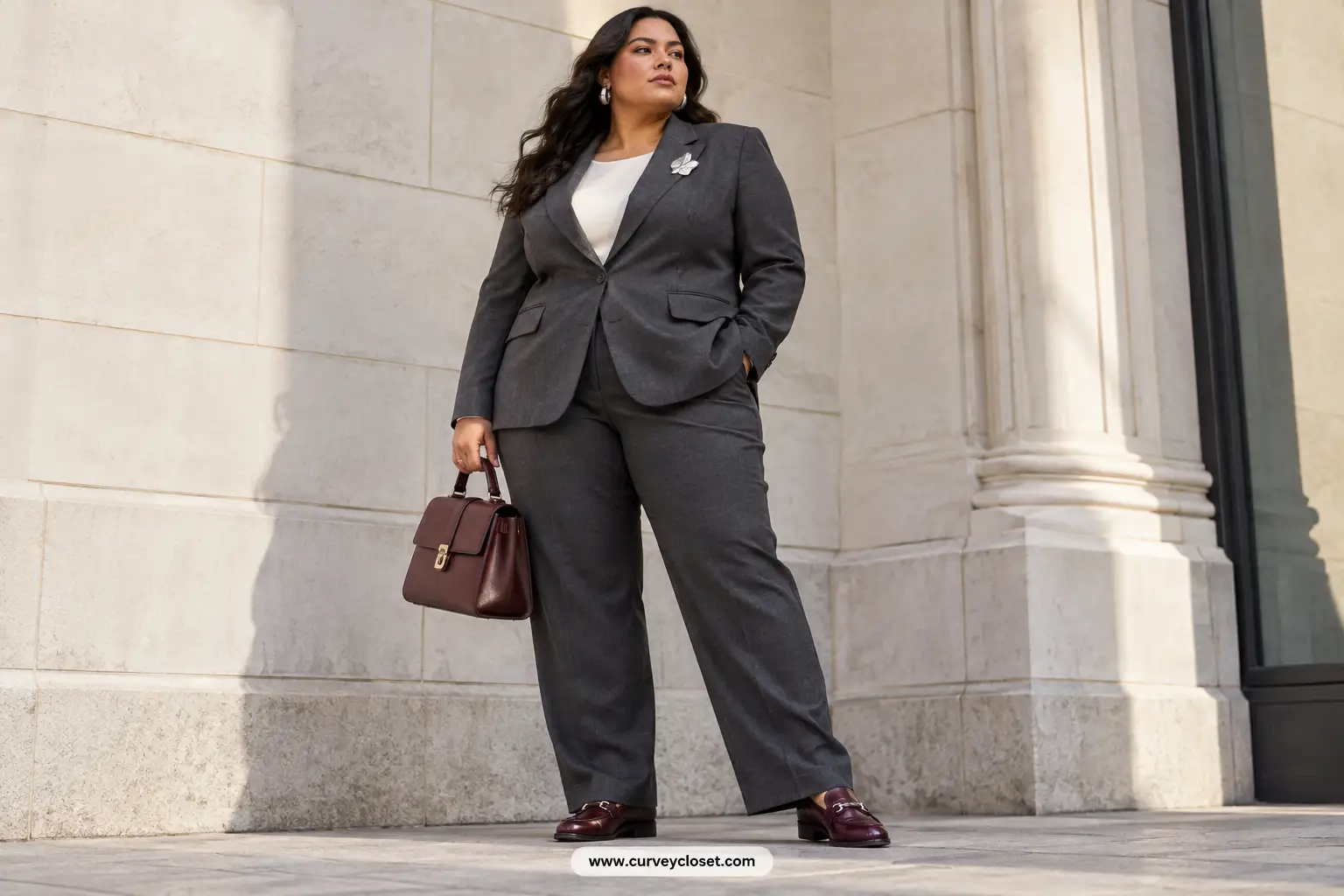
Good tailoring works with your body and your working day—not the other way around. These plus-size workwear tailoring do's and don'ts help you choose pieces that feel comfortable, look intentional and earn their place in your wardrobe.
From blazer shoulders to trouser hems, focus on how clothes move, where they sit and which alterations are genuinely useful. Your measurements are information, not a verdict: the goal is workwear that fits you.
1.Plus-size workwear tailoring do's and don'ts: Blazer fit
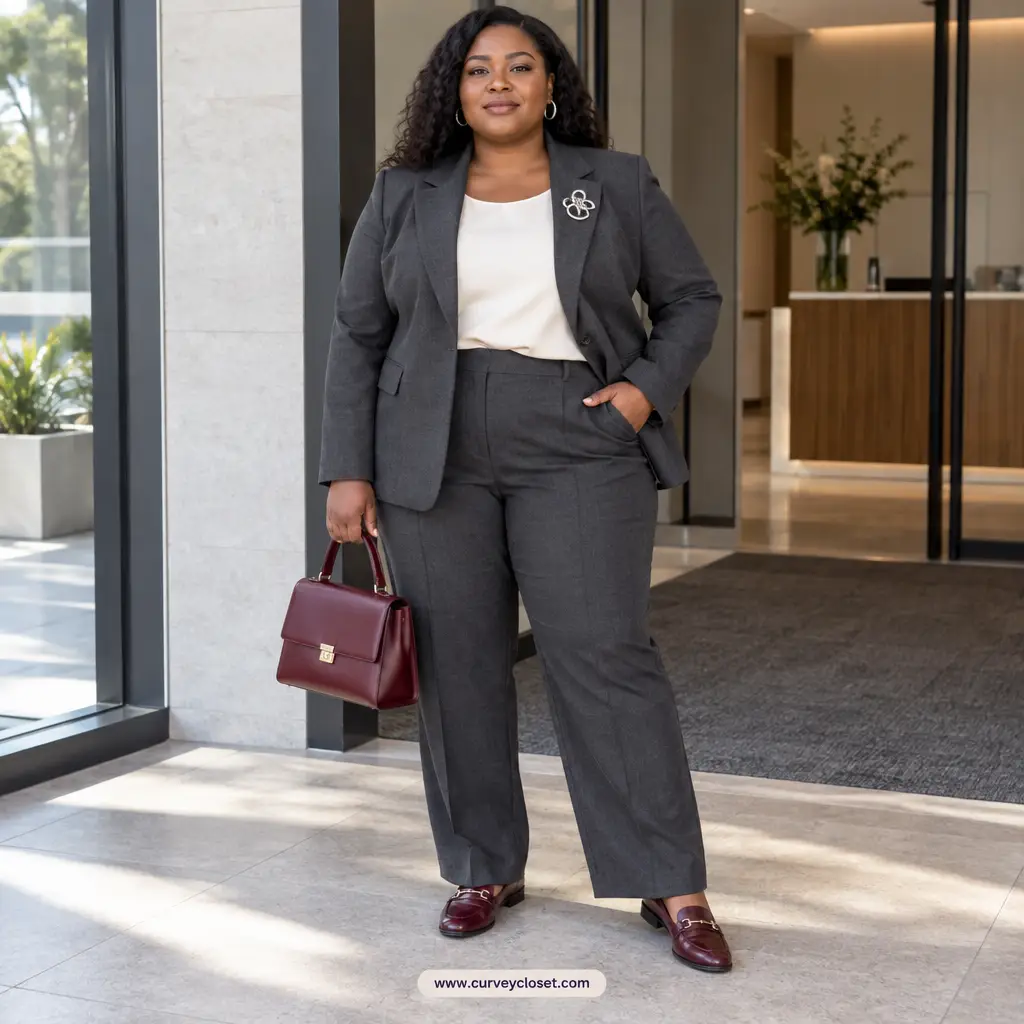
Do: Check the shoulders, upper arms and button closure while wearing your usual work top. Don't: Choose a smaller blazer and assume a tailor can release every tight area. A good starting fit lets you reach forward without the back pulling sharply or the sleeves gripping. If you plan to button it, the fronts should meet without strain. Shoulder reconstruction can be involved, while available seam allowance limits letting out. Ask a tailor what is possible before buying a piece specifically for alteration.
How to wear it: Wear your blazer over your thickest intended office layer when checking the fit.
2.Plus-size workwear tailoring do's and don'ts: Seated comfort

Do: Sit, bend and take a few long steps when testing a trouser waistband and rise. Don't: Judge comfort only by how trousers look while you stand still. The waistband should feel secure without digging in, and the rise needs enough room for comfortable movement. Persistent pulling at the crotch can signal a cut mismatch rather than a simple sizing issue. Try another rise or pattern shape, and check that pockets remain usable. A discreet elasticated back can be a practical tailoring detail.
How to wear it: Try trousers with your shirt tucked in, then sit for several minutes before deciding.
3.Choose fabric and lining for your actual working day
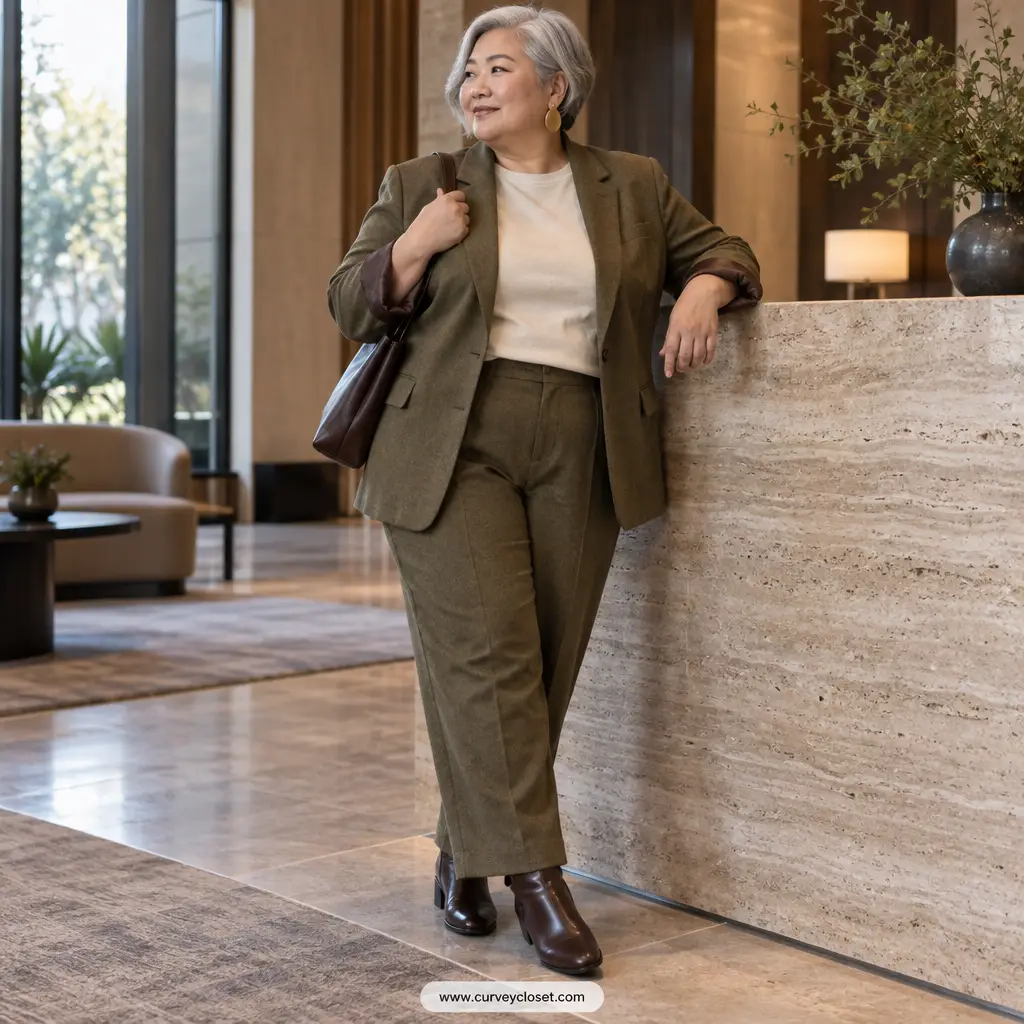
Do: Feel the inside seams and lining, and test whether the fabric moves comfortably with you. Don't: Assume a soft outer fabric guarantees a comfortable finished garment. A rigid lining can restrict a stretchy jacket, and rough seam finishes may irritate during a long day. Look for enough fabric substance to hang cleanly without feeling stiff. Wool blends, crepe and structured ponte offer different levels of drape and stretch. Check the care label too: the best choice suits your commute, office temperature and maintenance routine.
How to wear it: Pair textured tailoring with a smooth, opaque base layer to reduce friction between garments.
4.Set trouser hems with your working shoes
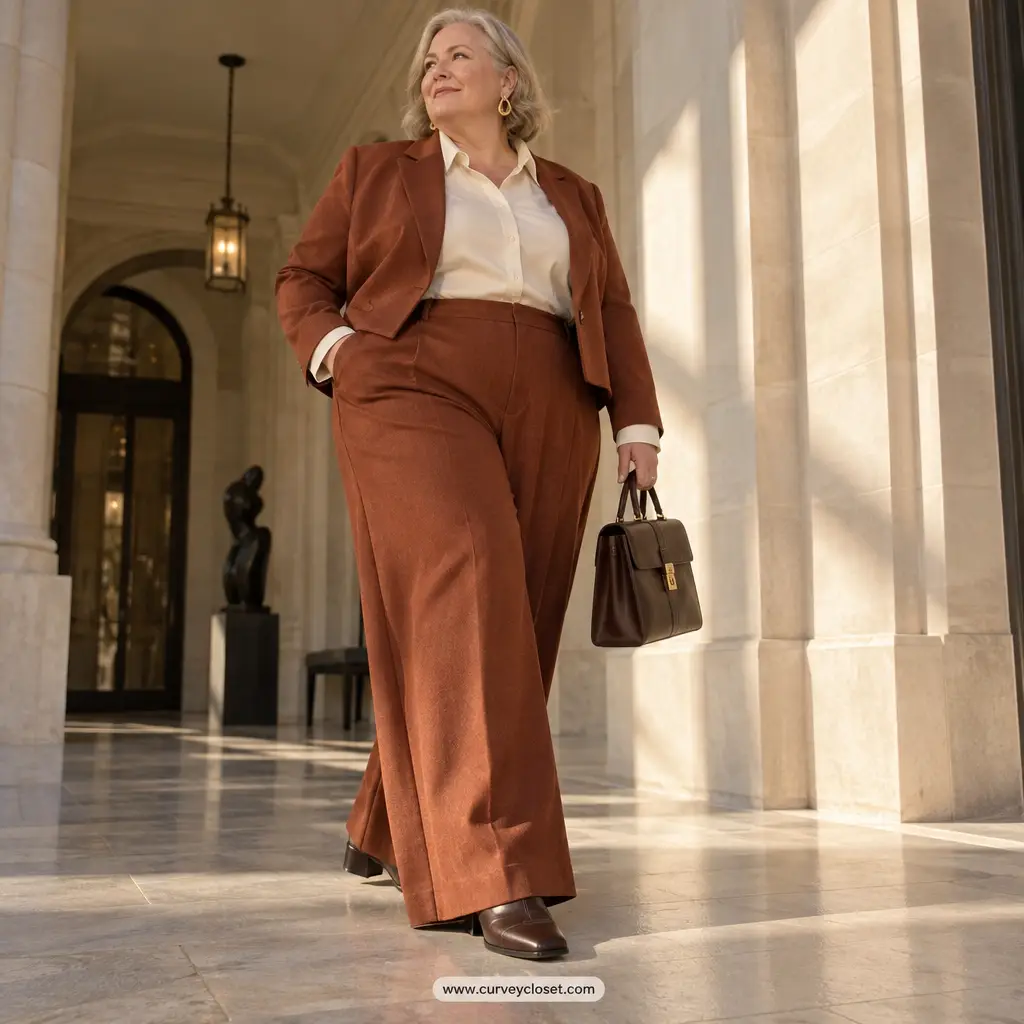
Do: Have trouser hems pinned while wearing the shoes you will use most often. Don't: Set the length barefoot or expect one hem to work identically with every heel height. Wide legs, straight cuts and tapered ankles each fall differently over footwear. Decide whether you want a clean ankle, a slight break or a longer drape, then check both legs while standing naturally. Walk across the fitting room to make sure the fabric clears the floor and does not catch beneath your heel.
How to wear it: Choose a main shoe height for each pair of trousers and bring those shoes to the fitting.
5.Balance jacket and sleeve lengths intentionally
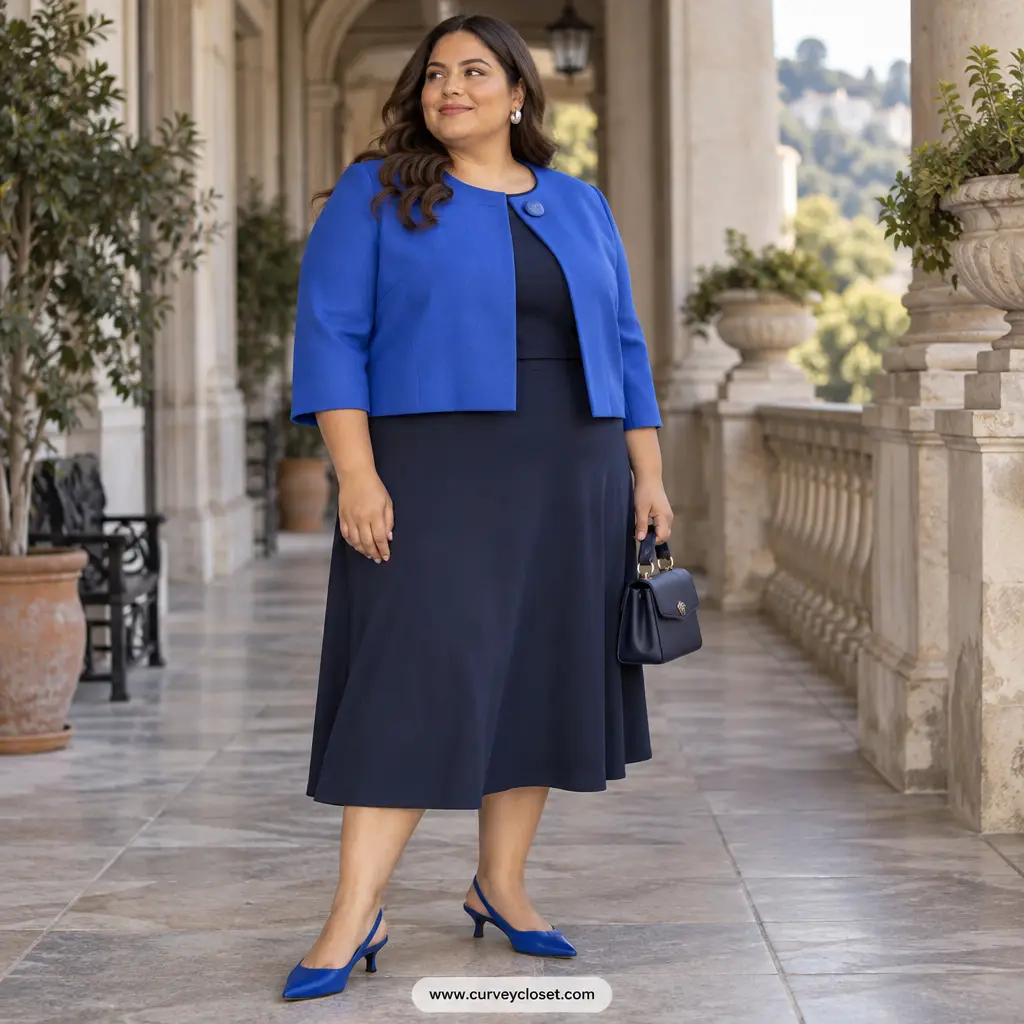
Do: Pin jacket and sleeve lengths to see how they work with your chosen outfit. Don't: Shorten everything automatically or treat one proportion rule as compulsory. A longer blazer can look excellent with wide trousers, while a cropped jacket can give a midi skirt a clear finishing point. Your preference matters more than a formula. Sleeve alterations also need planning: working buttonholes, vents and pocket placement can limit straightforward changes. Review the whole garment in a mirror before approving the final length.
How to wear it: Photograph pinned lengths from the front and side while wearing the complete outfit.
6.Give layers and closures enough room
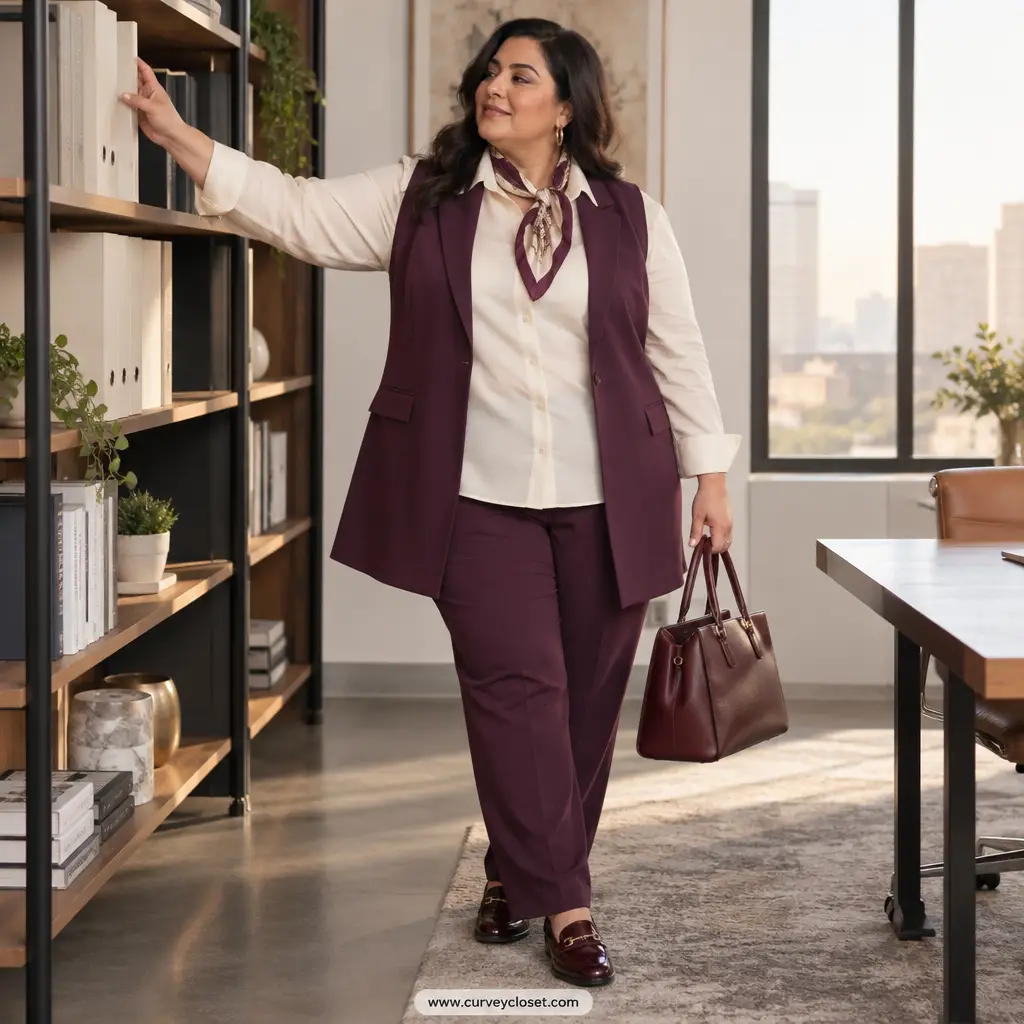
Do: Assess shirts, waistcoats and jackets together if you intend to wear them as a set. Don't: Rely on a safety pin or a tightly fastened belt to fix persistent pulling. Layering uses space, especially across the bust, upper arms and waist. If a shirt gaps, try a different cut or discuss a concealed snap with a tailor only when there is already enough room. An open waistcoat or jacket is also an intentional styling choice, not a compromise. Keep pockets lightly filled so closures sit comfortably.
How to wear it: Build your fitting outfit from the base layer outward, checking movement after each addition.
7.Protect the tailoring with thoughtful care
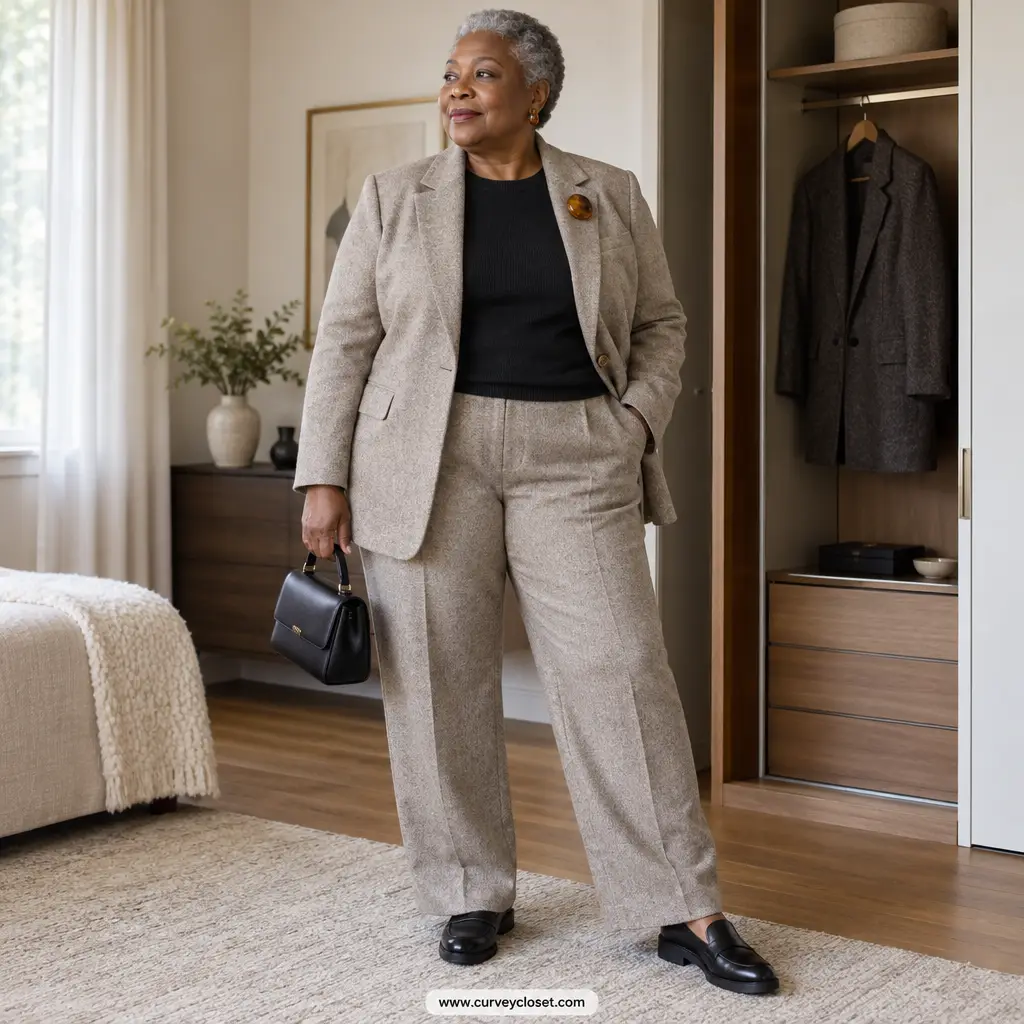
Do: Follow the care label, support jackets on shaped hangers and press fabrics using suitable settings. Don't: Apply high heat indiscriminately or store damp tailoring tightly packed together. Heat can mark some fabrics or damage stretch fibres, while poor storage can distort shoulders and crease lapels. Use a pressing cloth where appropriate, and test an inconspicuous area first. Let pieces dry fully before putting them away. Check loose buttons, hems and lining seams regularly so small repairs happen before they interrupt your working week.
How to wear it: Air your suit after wear, then hang the jacket with space around the shoulders.
The takeaway
Start with comfortable movement, then refine the details that matter to you. A well-placed button, an intentional hem or a smoother lining can make everyday workwear easier to wear. Take your usual shoes and base layers to fittings, discuss alteration options before committing, and let the clothes adapt to your body.
Get outfit ideas from your own closet
Curvy Closet picks a daily outfit from the clothes you already own.
Learn moreShare counts include shares made with the buttons on this page. Images are AI-generated illustrations.