7 Plus-Size Wrap Dress Do’s & Don’ts: A Fabric Guide
31 October 2026 · 4 min read · 7 ideas
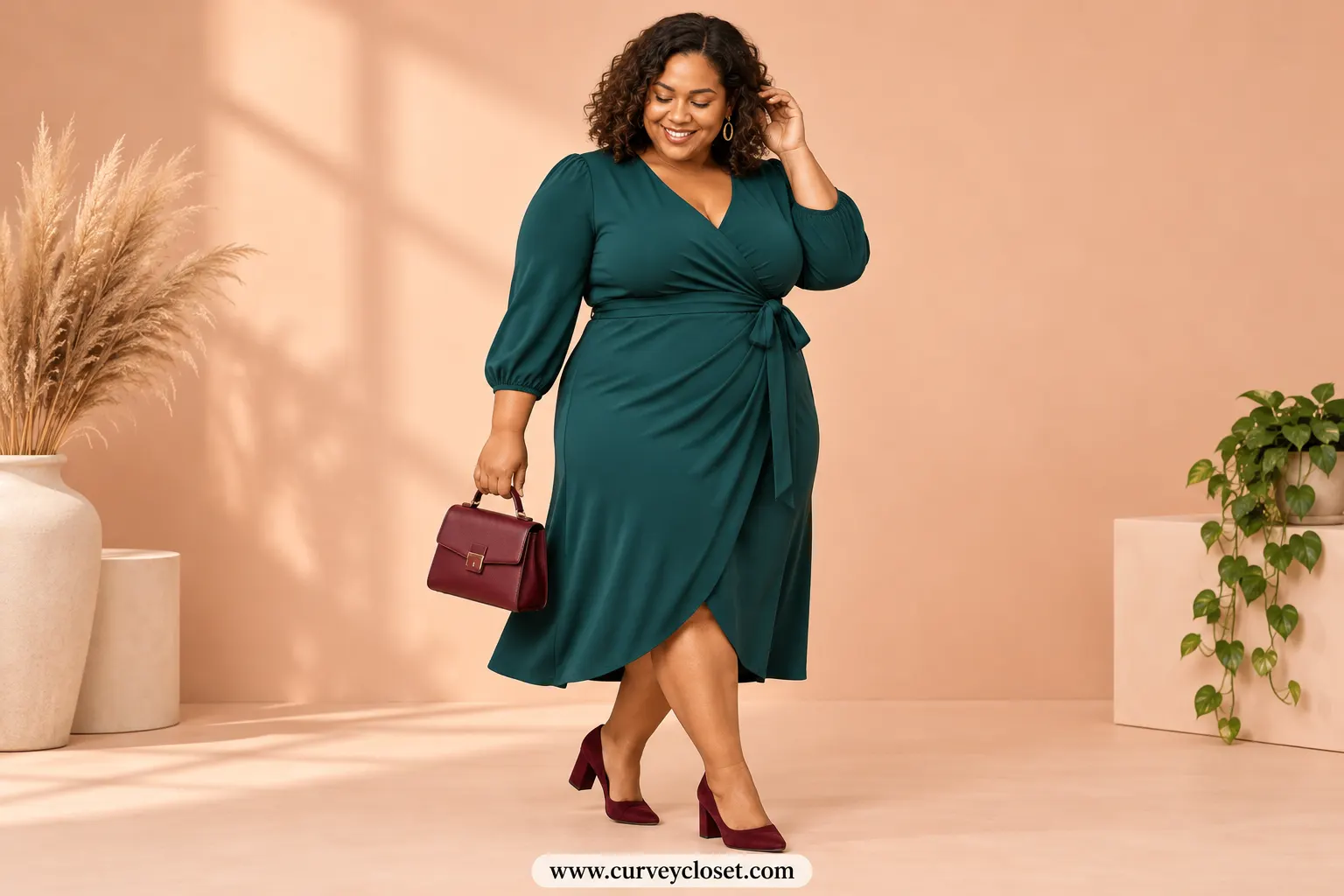
A wrap dress should let you sit, reach and move without constantly checking your neckline or adjusting your ties. The right combination of fit, fabric and fastening makes that everyday ease possible.
This fabric guide pairs seven practical do’s with technique-focused don’ts for plus-size wrap dresses. These aren’t rules about your body—they’re small adjustments that help your dress work for you.
1.Do fit the whole dress; don’t rely on tighter ties
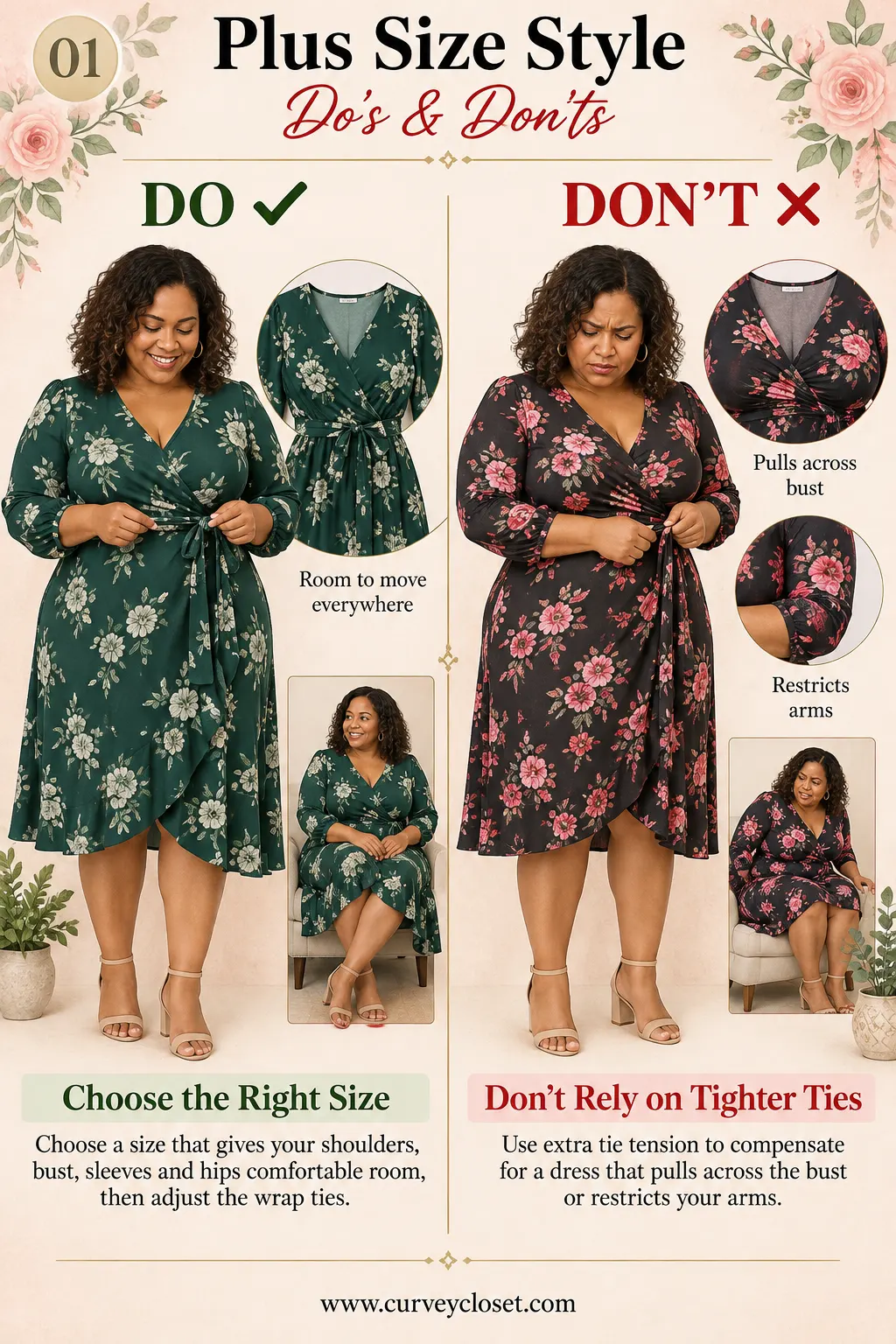
Do: Choose a size that gives your shoulders, bust, sleeves and hips comfortable room, then adjust the wrap ties. Don't: Use extra tie tension to compensate for a dress that pulls across the bust or restricts your arms. A wrap fastening offers adjustment, but it cannot replace enough fabric through the dress. Try reaching forward, sitting and taking a long step before deciding. If one area fits and another feels tight, compare cuts or ask a tailor what can realistically be altered. Your usual label size is only a starting point.
How to wear it: Try the dress with your intended underwear and shoes, then tie it loosely enough to breathe comfortably while seated.
2.Do secure the neckline; don’t distort the crossover
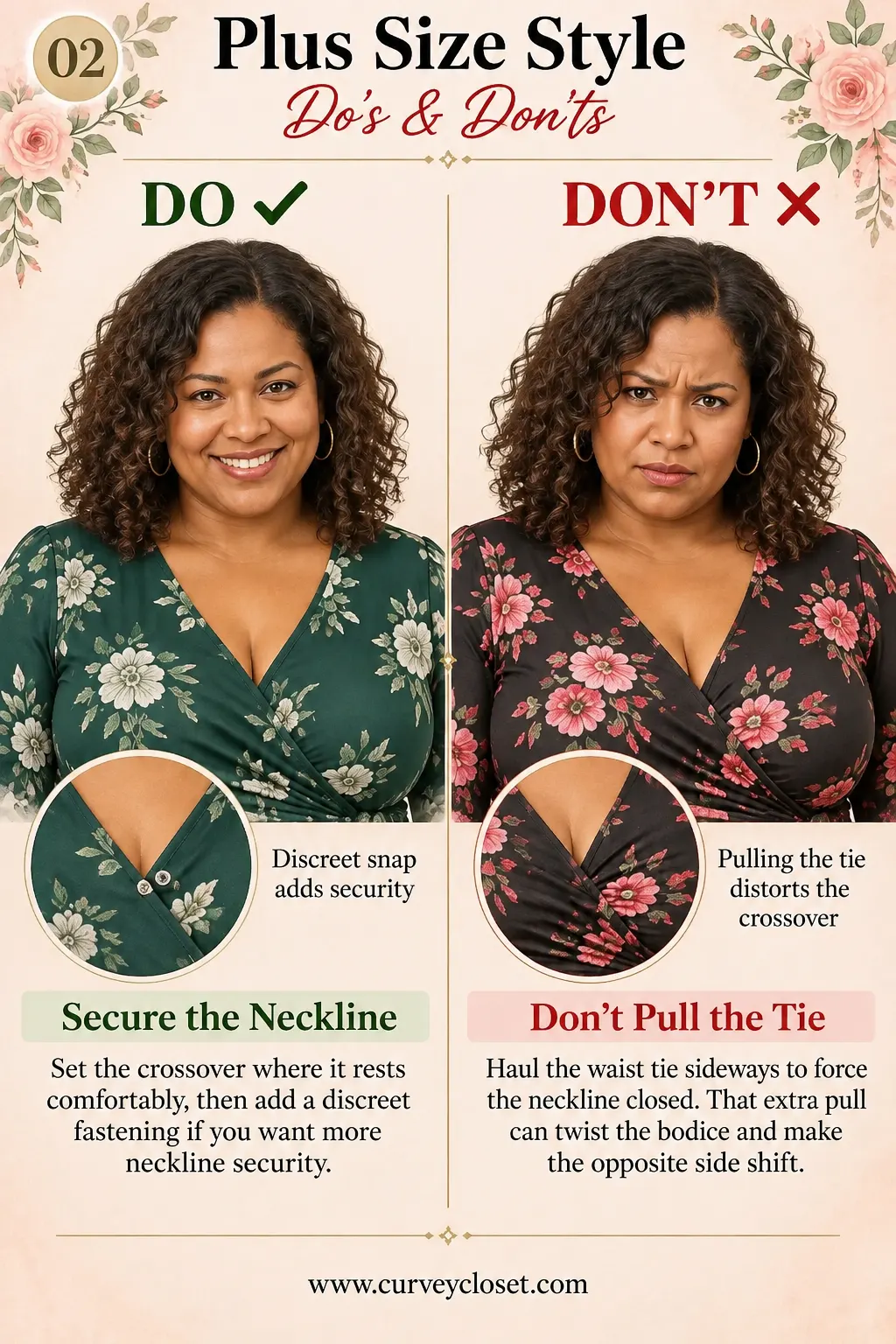
Do: Set the crossover where it rests comfortably, then add a discreet fastening if you want more neckline security. Don't: Haul the waist tie sideways to force the neckline closed. That extra pull can twist the bodice and make the opposite side shift. Check the neckline while reaching and leaning forward; a mirror at standing height won’t show every movement. A tailor can position a small snap where the layers naturally meet, provided the fabric supports it. A coordinating opaque camisole is another option when you want extra coverage without changing the dress.
How to wear it: Pin the proposed snap position while wearing the dress, then sit and reach before having it sewn in.
3.Do balance tie tension; don’t knot through discomfort
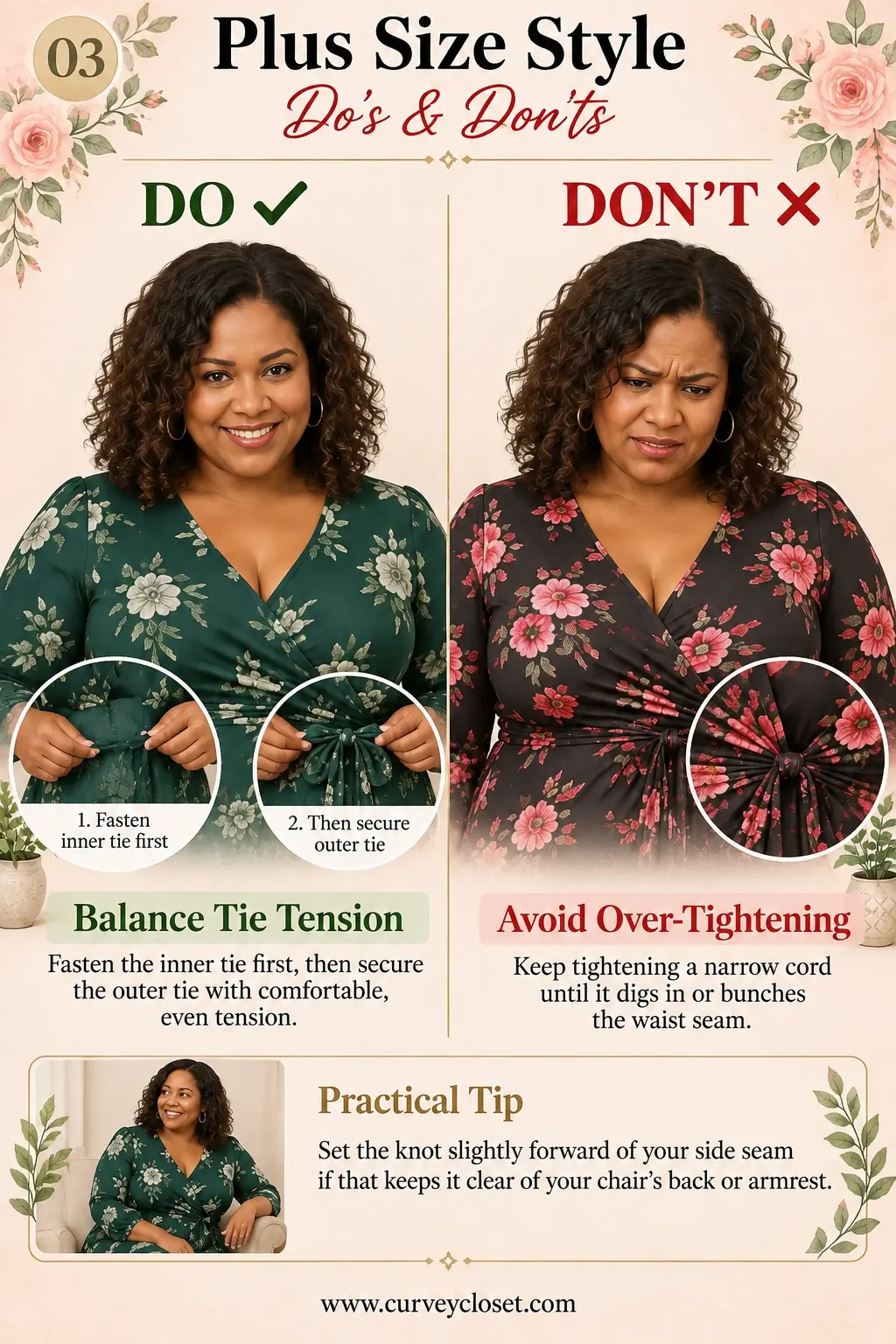
Do: Fasten the inner tie first, then secure the outer tie with comfortable, even tension. Don't: Keep tightening a narrow cord until it digs in or bunches the waist seam. The inner fastening helps hold the underlayer in place, so the outer tie needn’t do all the work. Sit down after tying and check how the knot feels against your waist. If a narrow tie is uncomfortable even at sensible tension, look for a dress with a wider fabric sash. Ask a tailor before replacing ties, because their attachment points need to support the change.
How to wear it: Set the knot slightly forward of your side seam if that keeps it clear of your chair’s back or armrest.
4.Fabric guide: Do test recovery; don’t judge by softness
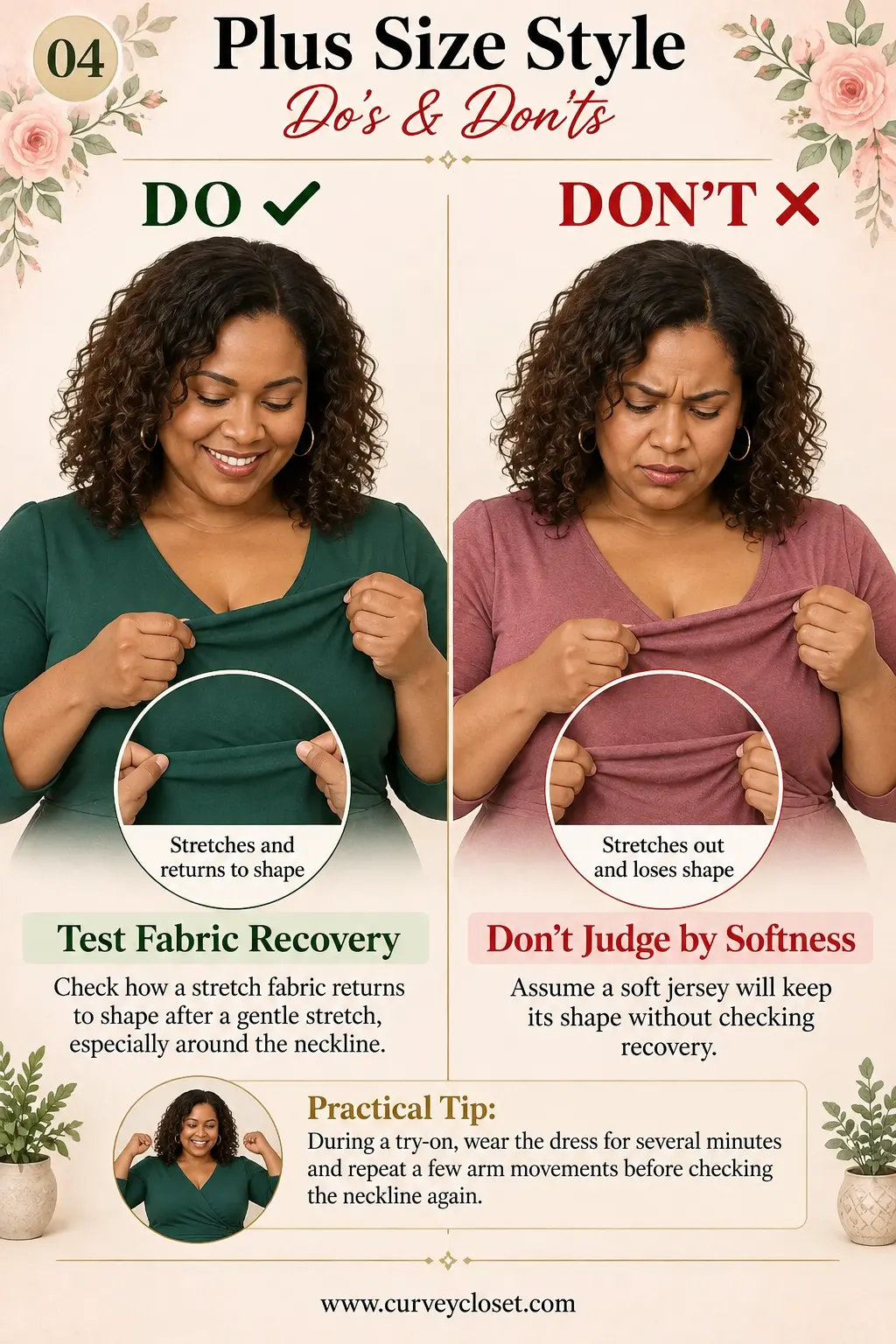
Do: Check how a stretch fabric returns to shape after a gentle stretch, especially around the neckline. Don't: Assume a soft jersey will keep its shape without checking recovery. Some jerseys feel lovely but stretch out during wear, leaving a crossover that needs frequent adjustment. Gently stretch a small section without forcing it, release it and watch whether it settles back. Check the fibre and care labels too: composition alone doesn’t tell you how a finished fabric behaves. A softly structured stretch crepe or stable jersey can offer movement while keeping the neckline’s intended line.
How to wear it: During a try-on, wear the dress for several minutes and repeat a few arm movements before checking the neckline again.
5.Fabric guide: Do check drape; don’t ignore friction
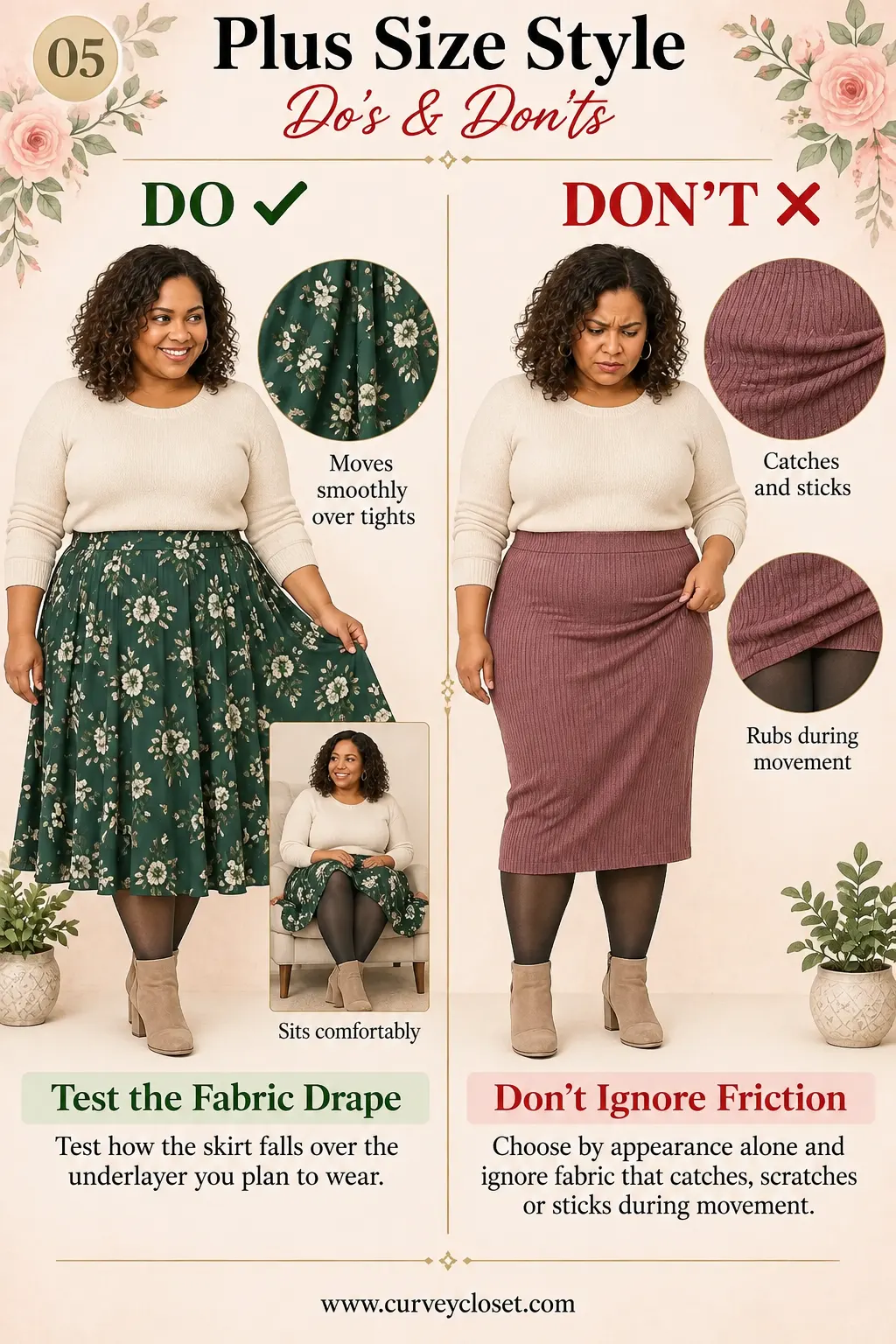
Do: Test how the skirt falls over the underlayer you plan to wear. Don't: Choose by appearance alone and ignore fabric that catches, scratches or sticks during movement. A dress can hang beautifully on a rail yet behave differently over tights, shorts or a slip. Walk, turn and sit to check whether the skirt releases smoothly rather than gathering against another fabric. Matte crepe, jersey and woven viscose each come in different weights and finishes, so feel the actual garment. If you want an underlayer, choose a comfortable, non-compressive option with a surface that lets the dress move.
How to wear it: Bring your intended tights or slip to the fitting room and take several steps to test the skirt’s movement.
6.Do test skirt overlap; don’t trust a standing check
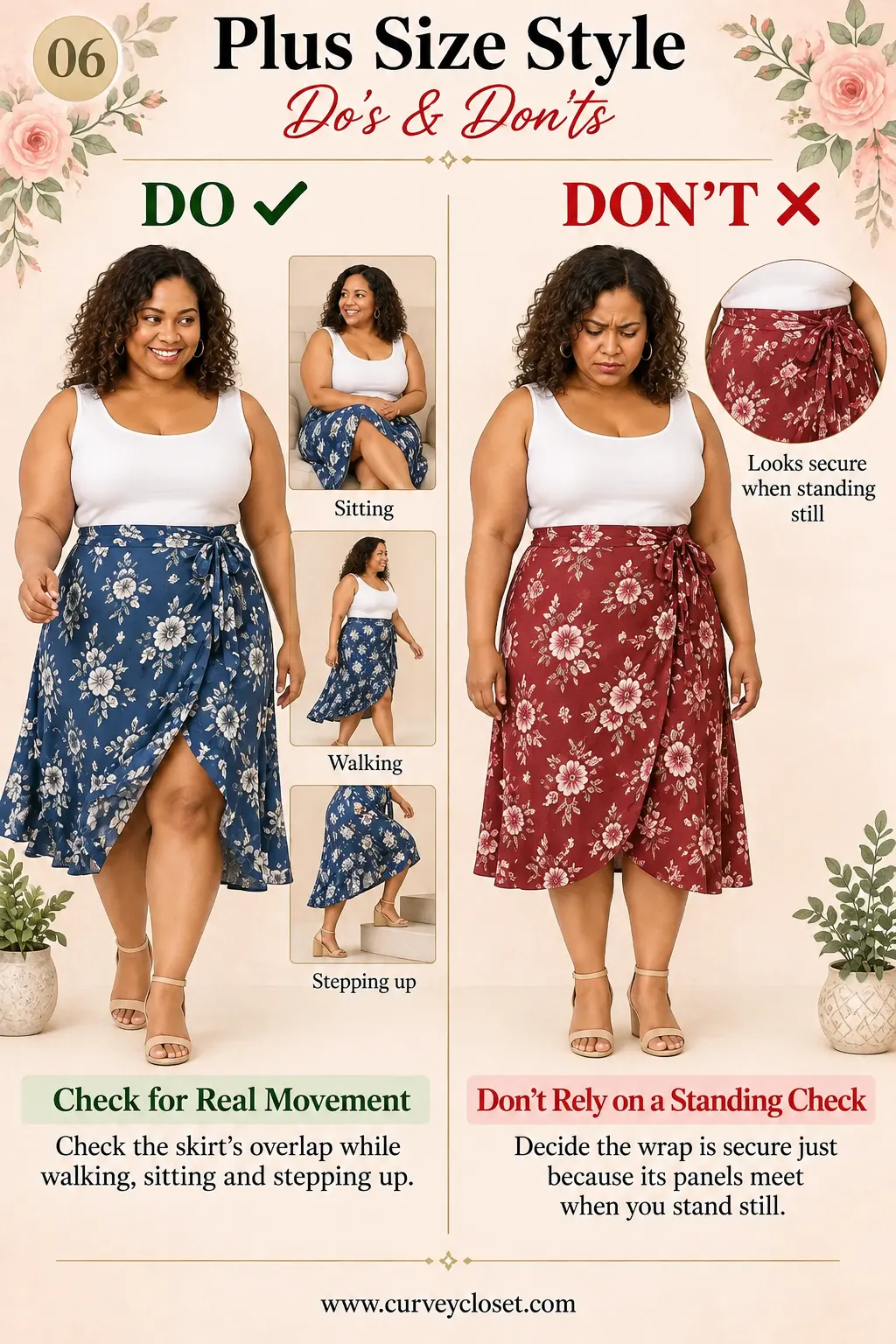
Do: Check the skirt’s overlap while walking, sitting and stepping up. Don't: Decide the wrap is secure just because its panels meet when you stand still. The underpanel needs enough reach for the movement you expect from your day. Try a seated position and a comfortable long stride without holding the skirt closed. If the overlap feels unreliable, compare another size or cut, or consider a faux-wrap dress with a fixed skirt. A tailor may add a discreet fastening, but it should not create pulling or limit your stride.
How to wear it: Test a step or low platform in your intended shoes, keeping your hands free so you can assess the overlap honestly.
7.Do follow fabric care; don’t hang heavy wet knits
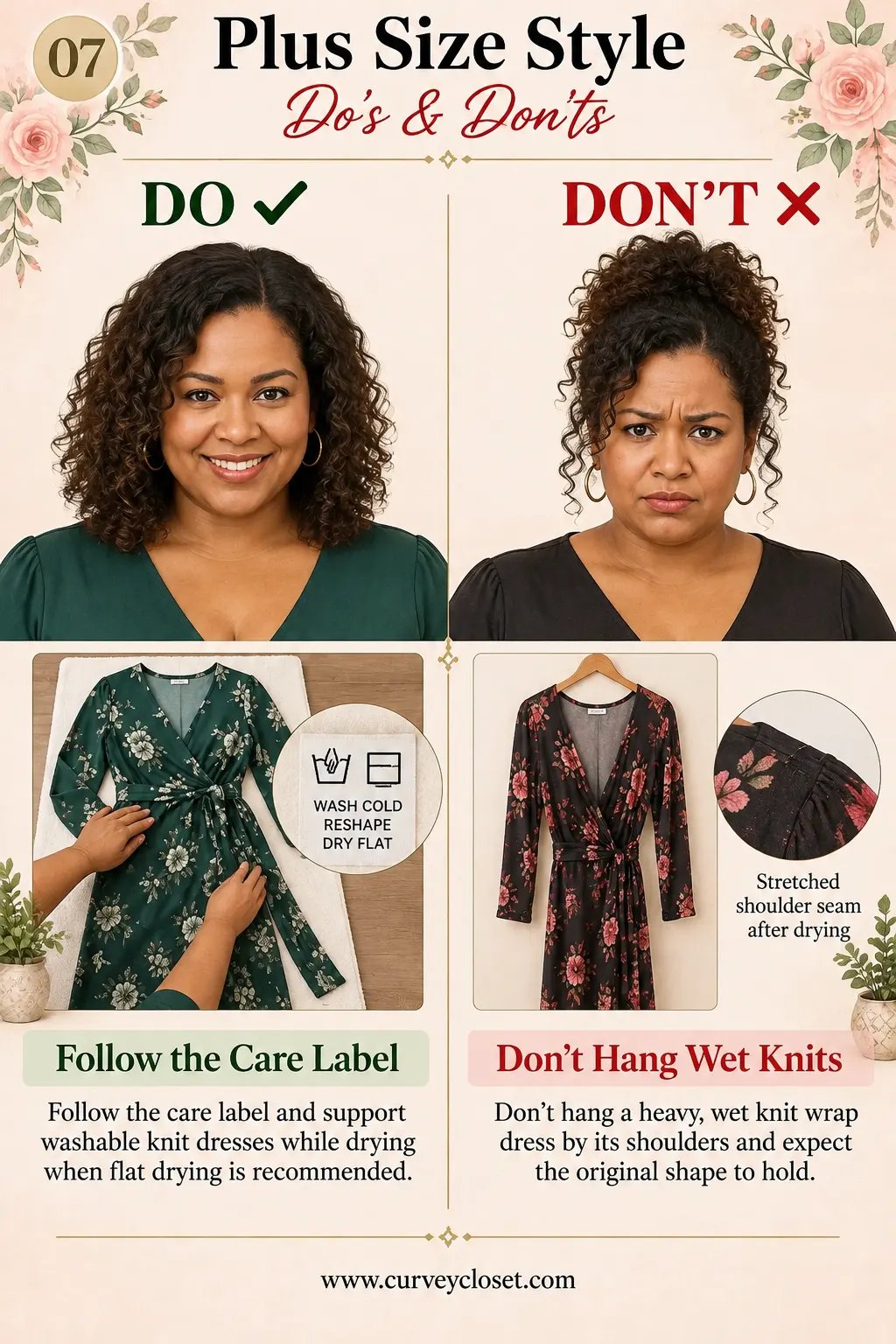
Do: Follow the care label and support washable knit dresses while drying when flat drying is recommended. Don't: Hang a heavy, wet knit wrap dress by its shoulders and expect the original shape to hold. Water adds weight, which can stretch shoulder seams, lengthen the skirt and change how the crossover sits. After washing as directed, gently remove excess water without wringing and reshape the dress on a suitable flat drying surface if instructed. Woven fabrics may need different treatment. Check pressing instructions before smoothing a sash, and store ties untwisted so they are easy to fasten next time.
How to wear it: Before the next wear, smooth the sash according to its care label and check that the shoulder seams sit in their original position.
The takeaway
Start with comfortable fit, then check the neckline, tie tension and overlap while moving. Choose fabric that feels good against your skin and falls the way you like. If a dress still needs constant adjusting, a different cut or a thoughtful alteration is a better answer than pulling the ties tighter.
Get outfit ideas from your own closet
Curvy Closet picks a daily outfit from the clothes you already own.
Learn moreShare counts include shares made with the buttons on this page. Images are AI-generated illustrations.