7 Sweater Vest Layering Tips: Paired Do’s & Don’ts
28 October 2026 · 4 min read · 7 ideas

A sweater vest can bring colour, texture and a fresh shape to an outfit—but comfortable layering starts with how the pieces work together. These layering tips focus on movement, fabric and intentional proportions, not changing your body.
Each paired do and don’t tackles one practical detail, from armholes that leave room for your shirt to hems that sit where you want them. Use them as fitting-room checks, then make the finished look your own.
1.Armhole layering tips: leave room to move
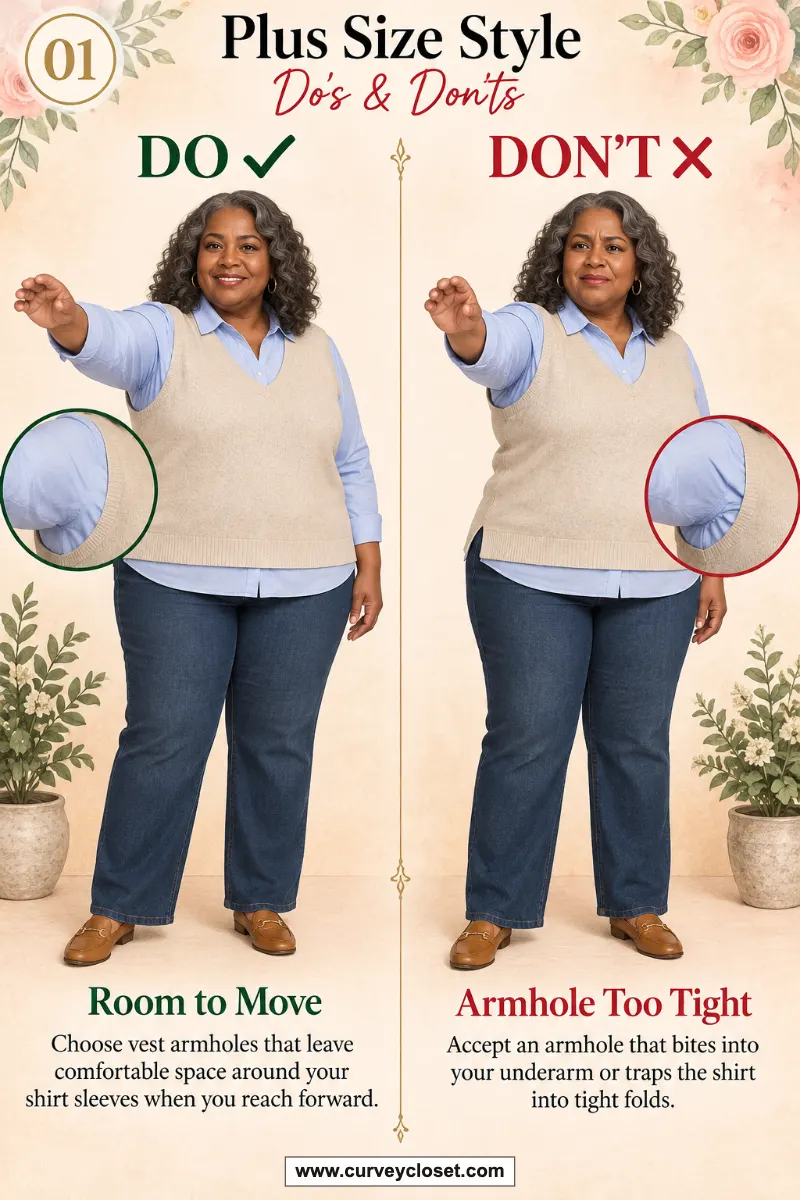
Do: Choose vest armholes that leave comfortable space around your shirt sleeves when you reach forward. Don't: Accept an armhole that bites into your underarm or traps the shirt into tight folds. Try the vest over the actual shirt you plan to wear, rather than judging it over a camisole. Reach for an imaginary shelf and cross your arms. If the opening catches or pulls, compare another cut or size; the right adjustment should improve movement without dictating the rest of your outfit.
How to wear it: Wear an oat V-neck vest over a blue poplin shirt, then check that both sleeves move freely before adding your bag.
2.Underlayer layering tips: manage fabric, not your body
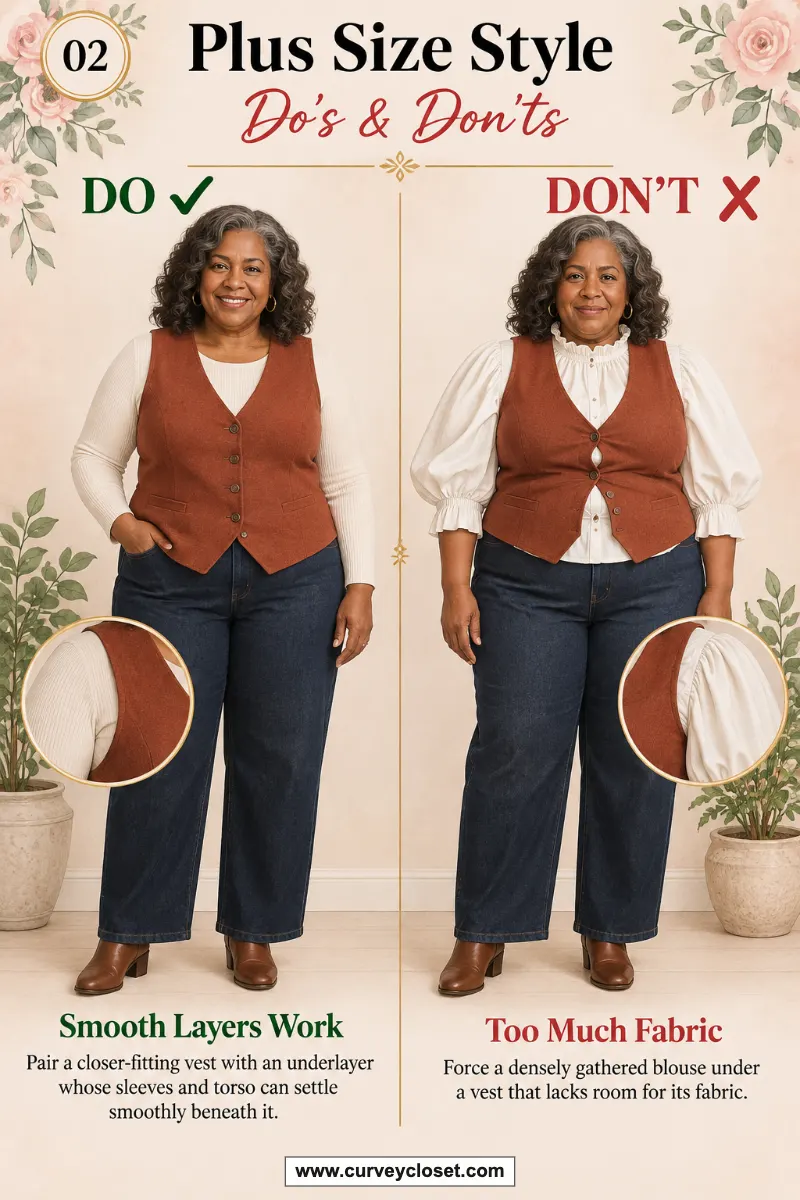
Do: Pair a closer-fitting vest with an underlayer whose sleeves and torso can settle smoothly beneath it. Don't: Force a densely gathered blouse under a vest that lacks room for its fabric. Volume is welcome when the pieces have space to work together. A puff-sleeve blouse may simply need a vest with deeper openings and more ease. For this pairing, compare a softly fitted jersey top with a heavily gathered cotton blouse: the difference is fabric capacity, not whether your body suits either style.
How to wear it: Try a fine-rib cream top beneath a rust vest, keeping the underlayer comfortably fitted rather than stretched.
3.Necklines: give each edge a clear place
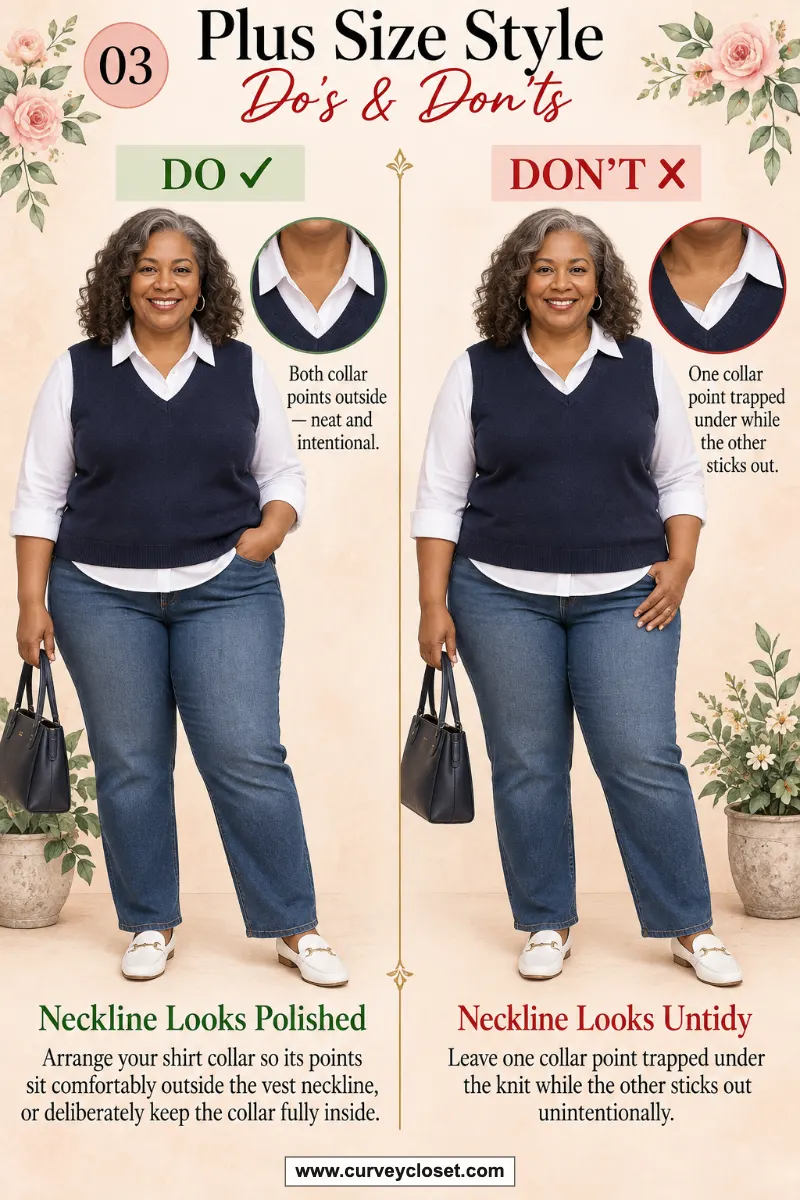
Do: Arrange your shirt collar so its points sit comfortably outside the vest neckline, or deliberately keep the collar fully inside. Don't: Leave one collar point trapped under the knit while the other sticks out unintentionally. Neither a visible collar nor a tucked-in collar is automatically better. What matters is choosing the effect and checking that nothing rubs your neck. With a V-neck vest, lightly straighten the shirt placket before arranging the collar so the layers feel settled rather than twisted.
How to wear it: Style a navy V-neck vest with both white shirt collar points outside, then add small silver hoops.
4.Hem lengths: make the shirt reveal intentional
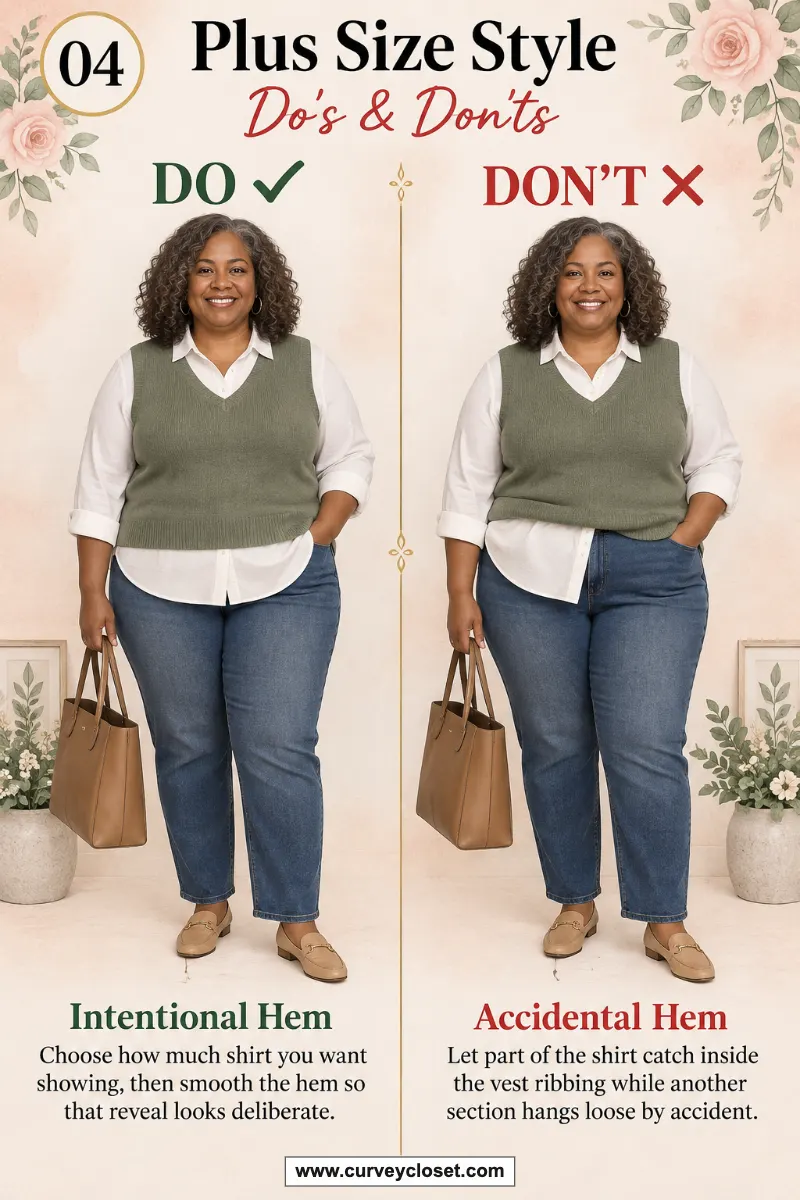
Do: Choose how much shirt you want showing, then smooth the hem so that reveal looks deliberate. Don't: Let part of the shirt catch inside the vest ribbing while another section hangs loose by accident. A longer shirt, a curved hem or no visible shirt hem can all work. Start with a few centimetres showing and adjust to your preference. Check the side and back views too: a shirt that moves comfortably should not need constant pulling to maintain the finish you chose.
How to wear it: Wear a sage vest over an ivory curved-hem shirt, smoothing the shirt free of the ribbing all the way around.
5.Tucking: respect the thickness of the knit
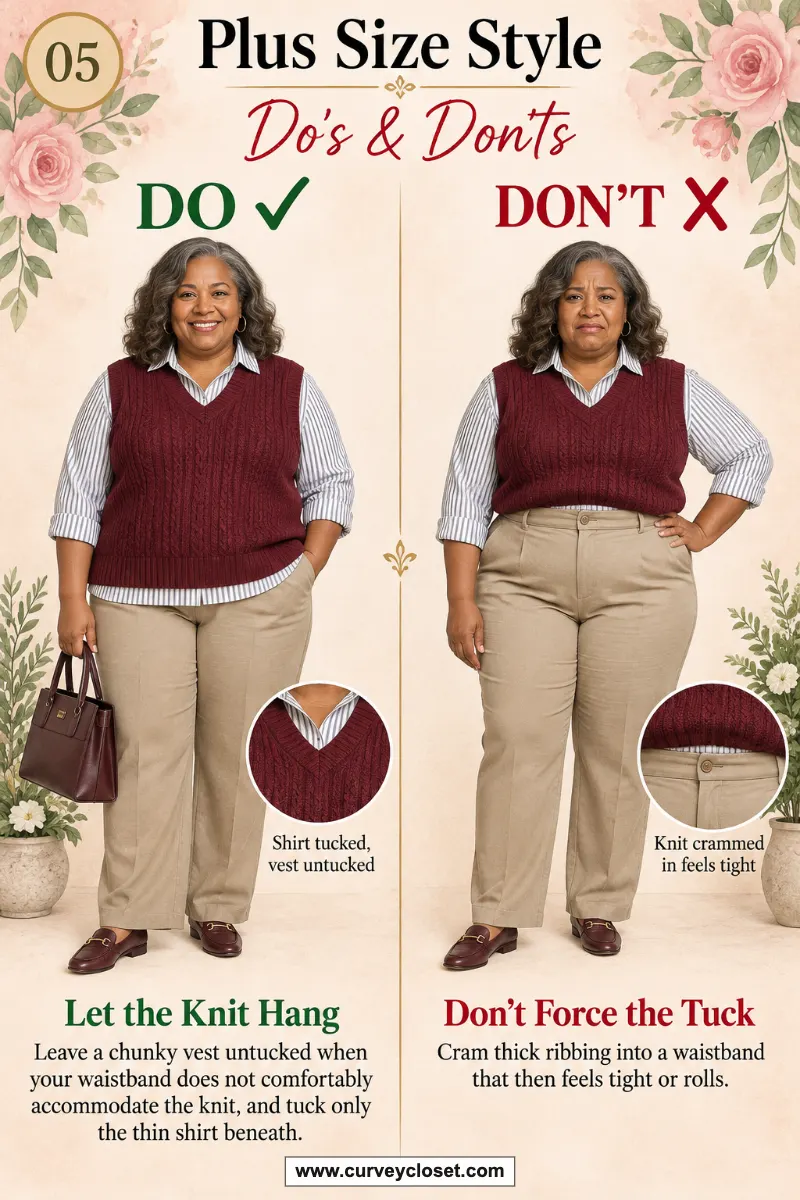
Do: Leave a chunky vest untucked when your waistband does not comfortably accommodate the knit, and tuck only the thin shirt beneath. Don't: Cram thick ribbing into a waistband that then feels tight or rolls. A tuck is a styling option, not a requirement. If you enjoy a tucked vest, try a finer knit or trousers with enough waistband ease for the extra layer. In this outfit, letting the substantial knit fall freely keeps its texture intact and makes sitting more comfortable.
How to wear it: Tuck a lightweight striped shirt into relaxed trousers and let the chunky burgundy vest hang freely over the waistband.
6.Fabric comfort: put a soft barrier where you need it
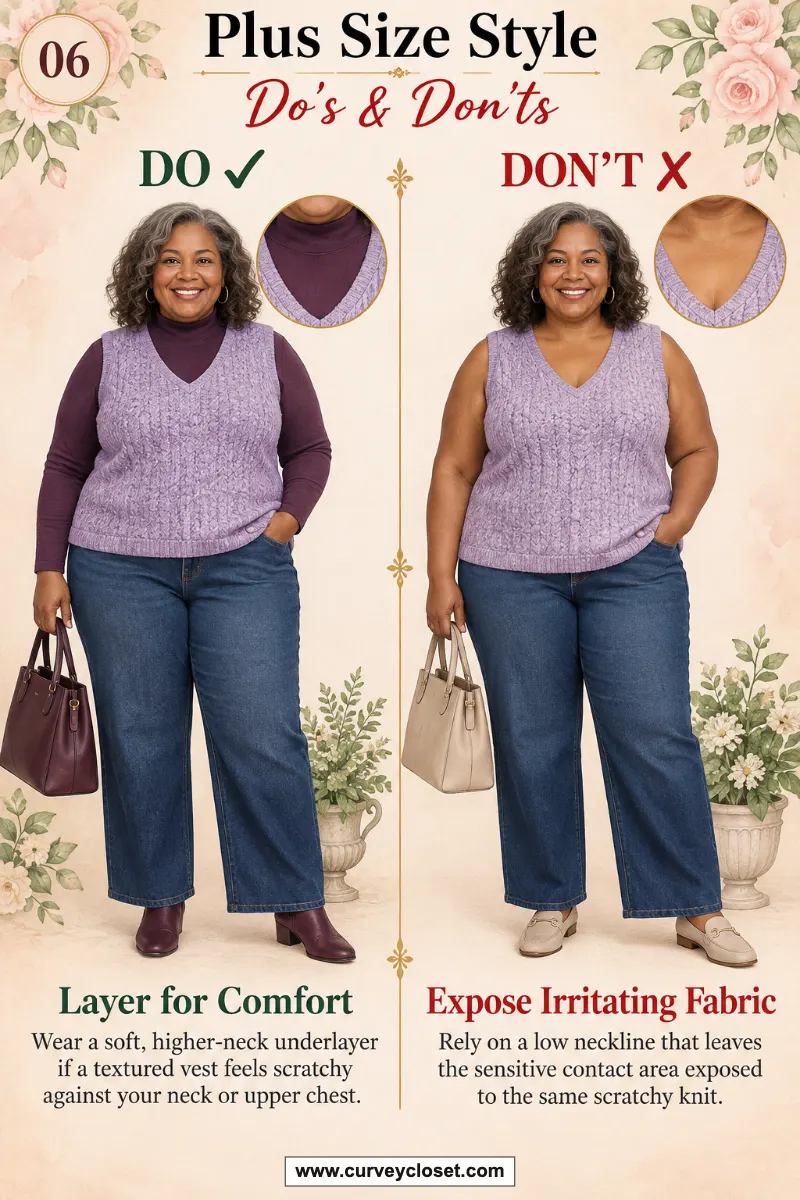
Do: Wear a soft, higher-neck underlayer if a textured vest feels scratchy against your neck or upper chest. Don't: Rely on a low neckline that leaves the sensitive contact area exposed to the same scratchy knit. Texture preferences are individual, so test the finished pairing for several minutes before removing tags. An opaque cotton mock neck can create a comfortable barrier without changing the vest's character. If irritation continues through the underlayer, choose a different fibre or finish rather than expecting yourself to tolerate it.
How to wear it: Layer a soft plum cotton mock neck beneath a textured lilac vest so the knit does not touch your neckline.
7.Sleeves: make cuff adjustments comfortable
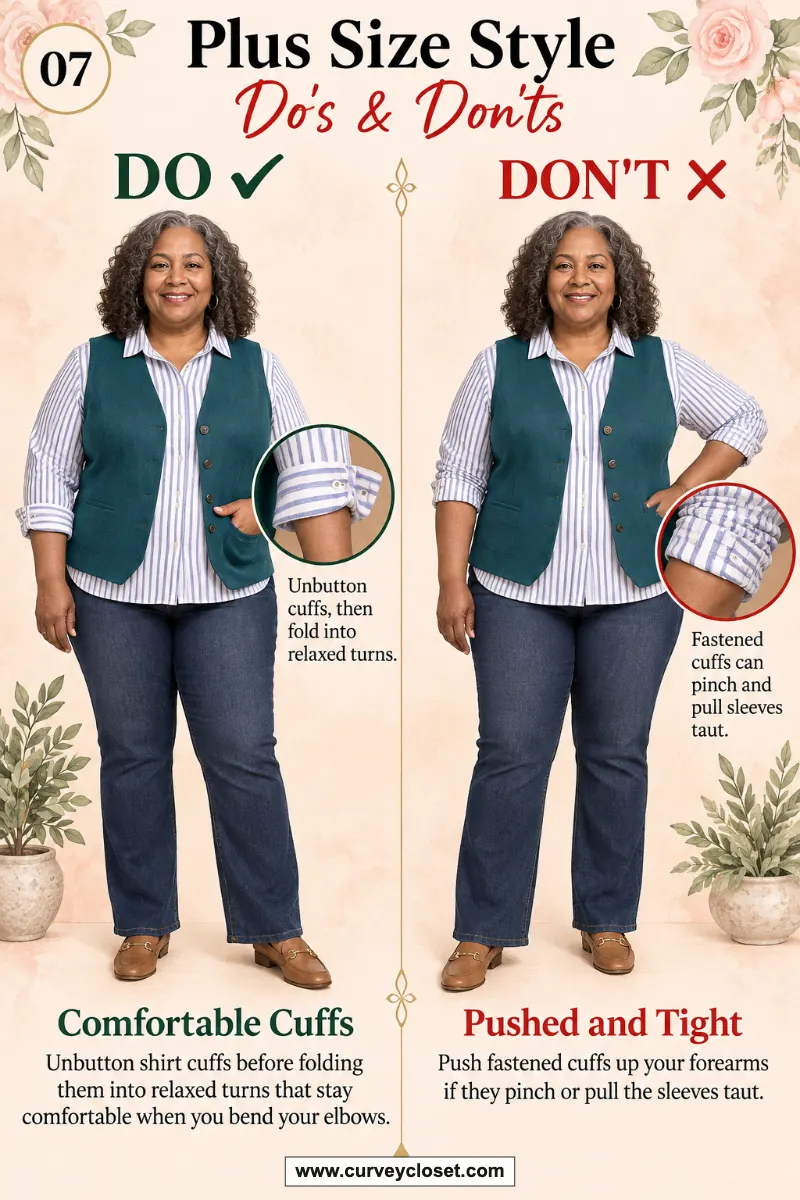
Do: Unbutton shirt cuffs before folding them into relaxed turns that stay comfortable when you bend your elbows. Don't: Push fastened cuffs up your forearms if they pinch or pull the sleeves taut. A vest puts sleeves on display, so their finish can be a useful styling detail. There is no required roll height: stop wherever the fabric rests comfortably. Bend and straighten your arms after adjusting, and let the cuffs back down if the folds feel restrictive during your day.
How to wear it: With a teal vest and striped shirt, unbutton each cuff and make two loose folds before checking elbow movement.
The takeaway
The best sweater vest pairing gives every layer enough room to do its job. Check your armholes, smooth your underlayer and try the outfit sitting down before deciding on hems or tucks. These are adjustable styling techniques—not rules about which bodies can wear which clothes.
Get outfit ideas from your own closet
Curvy Closet picks a daily outfit from the clothes you already own.
Learn moreShare counts include shares made with the buttons on this page. Images are AI-generated illustrations.