7 Fabric Guide Do’s & Don’ts for Plus-Size Satin Skirts
7 October 2026 · 4 min read · 7 ideas
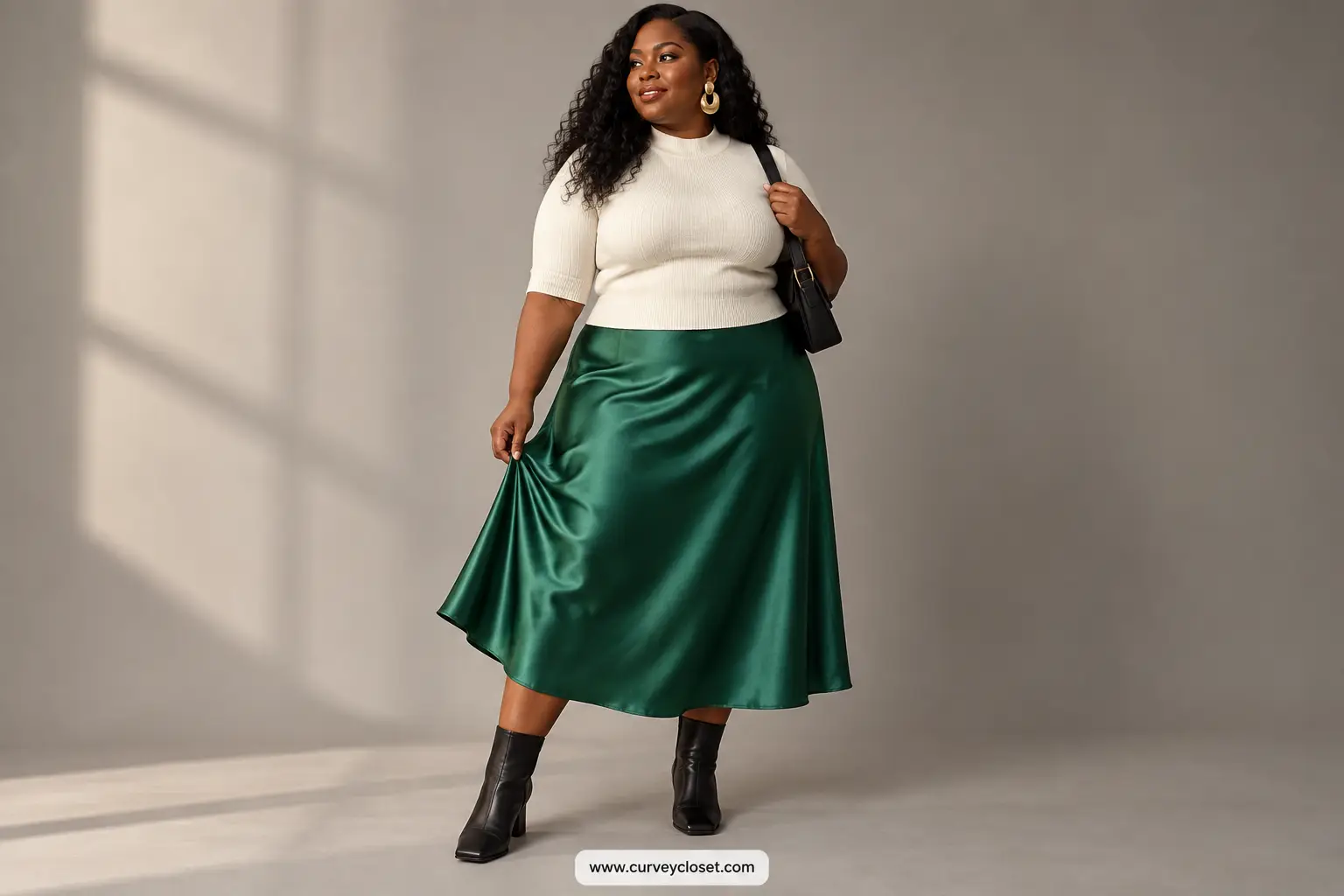
A satin skirt should feel as good when you sit down as it looks when you step out. This fabric guide helps you choose comfortable layers, assess lining and build outfits around that beautiful sheen.
These seven paired do’s and don’ts focus on fabric behaviour—not rules about your body. Use them when shopping, getting dressed or caring for a favourite skirt.
1.Fabric Guide Basics: Check the Fibre, Not Just the Shine
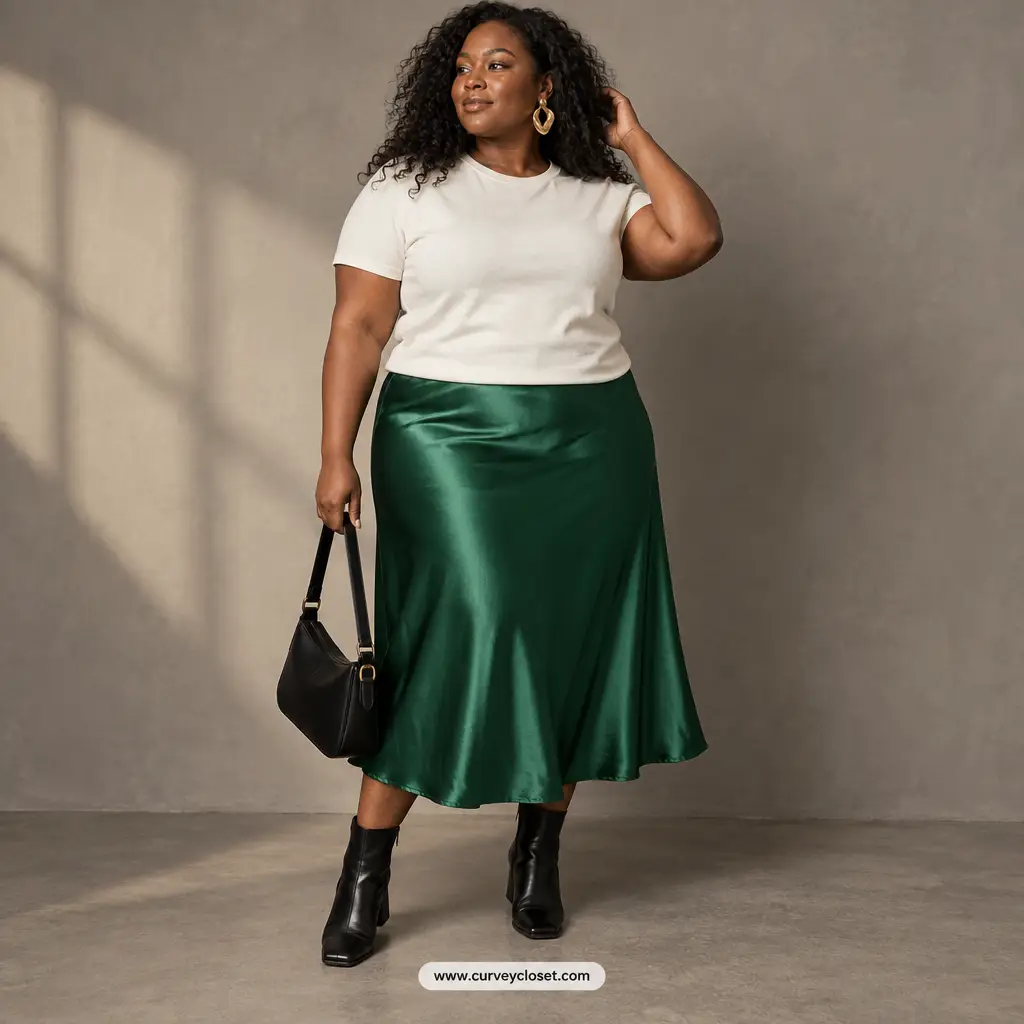
Do: Read the fibre label and feel the skirt against the top you plan to wear. Don't: Assume every satin skirt will breathe, stretch or wash the same way. Satin describes a weave, not a single fibre: silk, polyester, acetate and blends can behave differently. Check stretch separately rather than judging by shine. For a useful first pairing, try a smooth cotton-knit top with your skirt, then walk and sit in both. Notice warmth, surface friction and whether the skirt returns comfortably to place.
How to wear it: Wear a compact cotton-knit tee with a fluid satin midi and repeat one colour in your shoes for an easy coordinated outfit.
2.Fabric Guide Layering: Test for Static Together
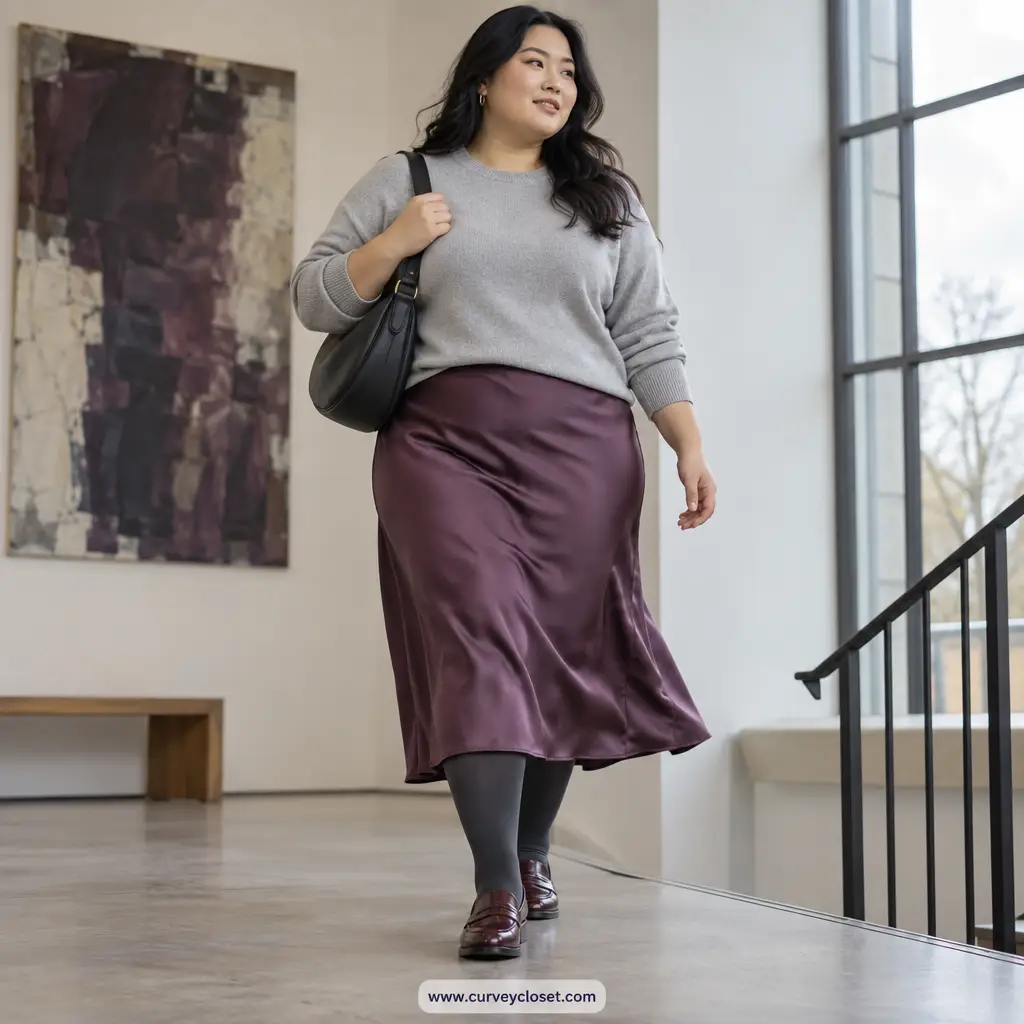
Do: Try the skirt with your actual tights or slip and walk around before heading out. Don't: Assume an extra synthetic layer will automatically stop static, or spray products without checking suitability. Static often becomes more noticeable in dry conditions, and some fabric combinations cling more than others. Compare layers rather than relying on fibre names alone. If you use an anti-static product, follow its instructions and test an inconspicuous area first; satin can show marks. A different smooth slip or hosiery combination may be the simplest fix.
How to wear it: Test your satin skirt over smooth tights, then add loafers and a fine-gauge cotton jumper for a comfortable everyday pairing.
3.Lining: Choose Smooth Movement, Not Extra Bulk

Do: Check that the lining feels smooth and has enough room for your full stride and seated position. Don't: Accept a lining that twists, pulls or stops your movement even when the outer skirt fits. Turn the skirt inside out to inspect seams, then try it on properly. The lining should move with you without peeking below the hem or restricting a slit. An unlined skirt can work well with a separate slip, but test both together for comfort, opacity and static. More layers are not automatically better.
How to wear it: Pair a lined champagne satin skirt with an opaque navy cotton blouse and low block heels, checking both layers while seated.
4.Waistbands: Judge Comfort Sitting Down
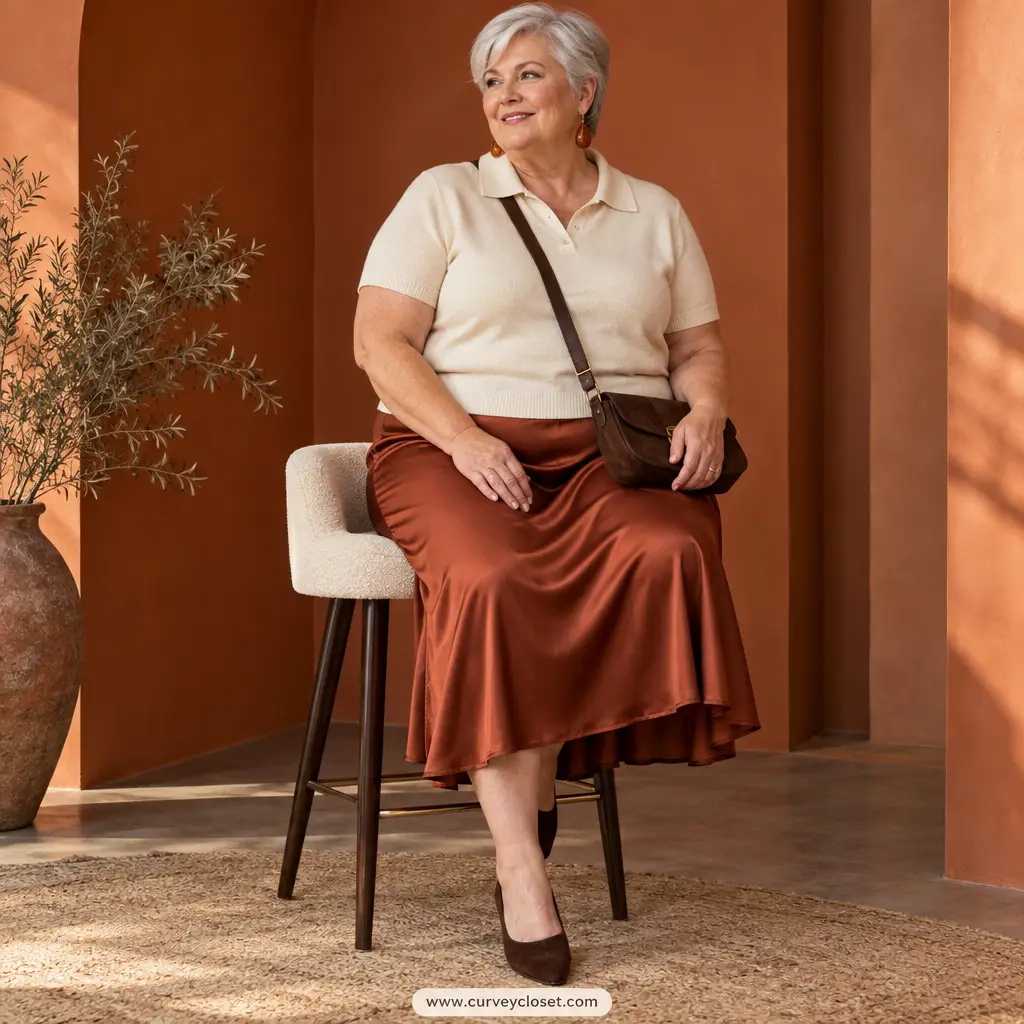
Do: Sit, bend and breathe normally to check waistband pressure before keeping a skirt. Don't: Size down to anchor the waist or assume elastic will always feel comfortable. A narrow elastic band may roll, while a firm woven waistband may press when seated; construction matters as much as the measurement. Look for a band that stays comfortable without constant adjustment. If your preferred fit needs more room through the hips than at the waist, a tailor may be able to adjust the waistband while preserving the skirt’s drape.
How to wear it: Try a wide, soft waistband with an untucked fine-knit polo, making sure the hem sits where you enjoy it rather than forcing a tuck.
5.Surface Texture: Pair Soft Knits Without Snags
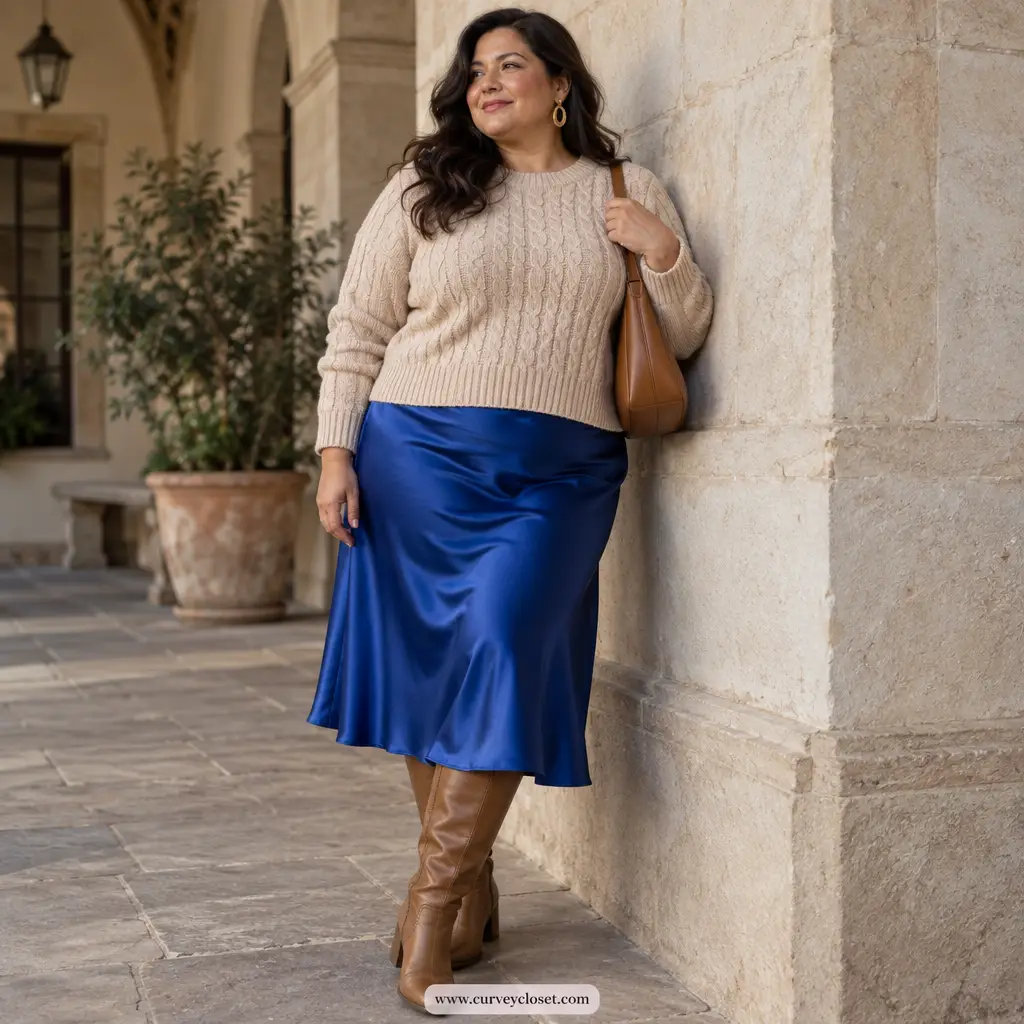
Do: Check the inside and hem of a textured top for rough seams, stiff fibres or exposed hardware. Don't: Let scratchy knitwear or sharp embellishments repeatedly rub against delicate satin. Texture contrast is lovely, but the contact points deserve attention. Run your hand over the surfaces that will touch the skirt, including bag hardware at hip level. Choose a soft, finished knit hem and smooth accessories where possible. If a favourite jumper feels rough, test it carefully over the skirt at home rather than discovering snags after a full day.
How to wear it: Wear a soft cotton cable-knit jumper with a satin skirt and choose a smooth-backed shoulder bag without dangling metal charms.
6.Drape: Give Bias-Cut Satin Room to Move
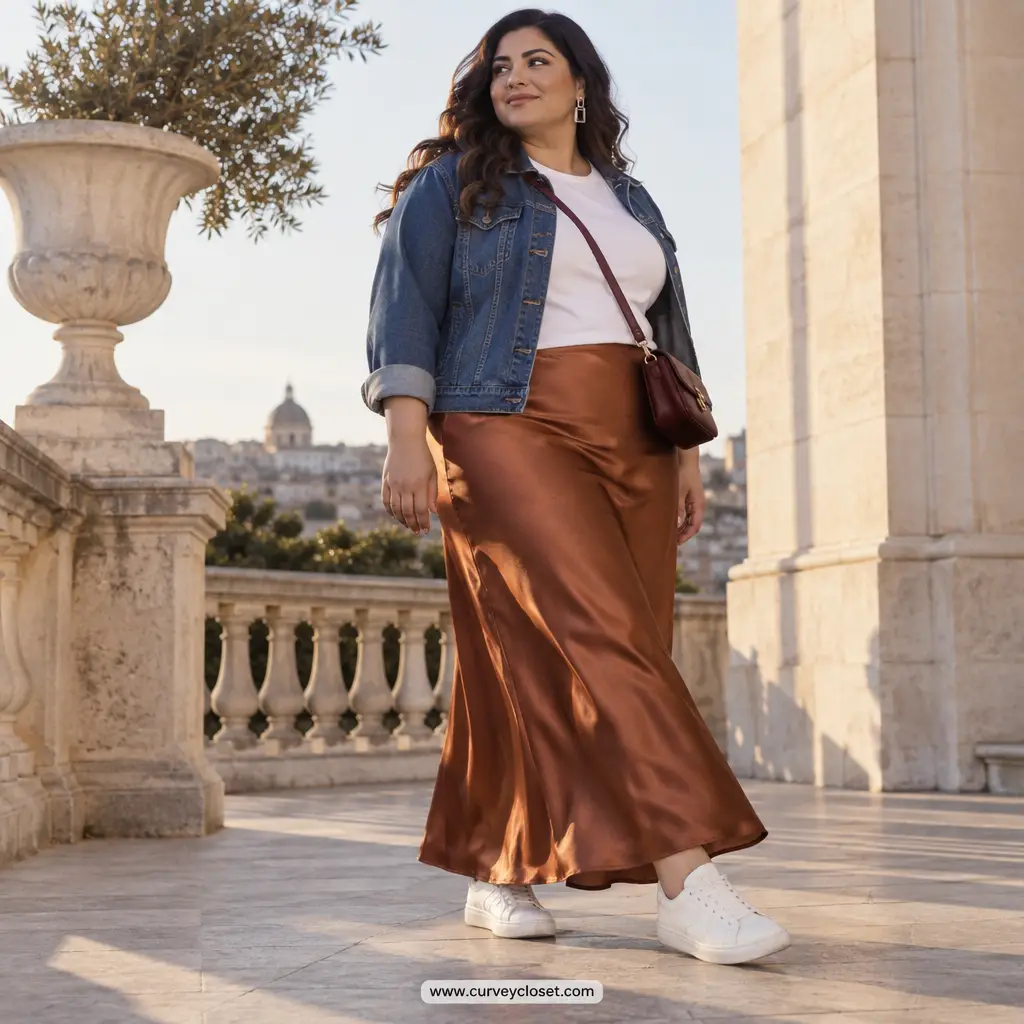
Do: Check the skirt’s intended cut and allow ease wherever the fabric needs to move. Don't: Treat diagonal pulling, a twisting side seam or a climbing hem as something you must tolerate. Bias-cut satin drapes differently from a straight-cut or gathered skirt, and its give is not the same as elastane stretch. Try another size or cut if movement feels restricted. When pairing it with crisp poplin or denim, experiment with an untucked hem or a loose partial tuck so excess fabric is not packed into the waistband.
How to wear it: Pair a freely moving bias-cut satin skirt with a cropped denim jacket and a smooth tee, leaving the jacket open for easy movement.
7.Care: Treat Satin and Its Partner Fabrics Separately
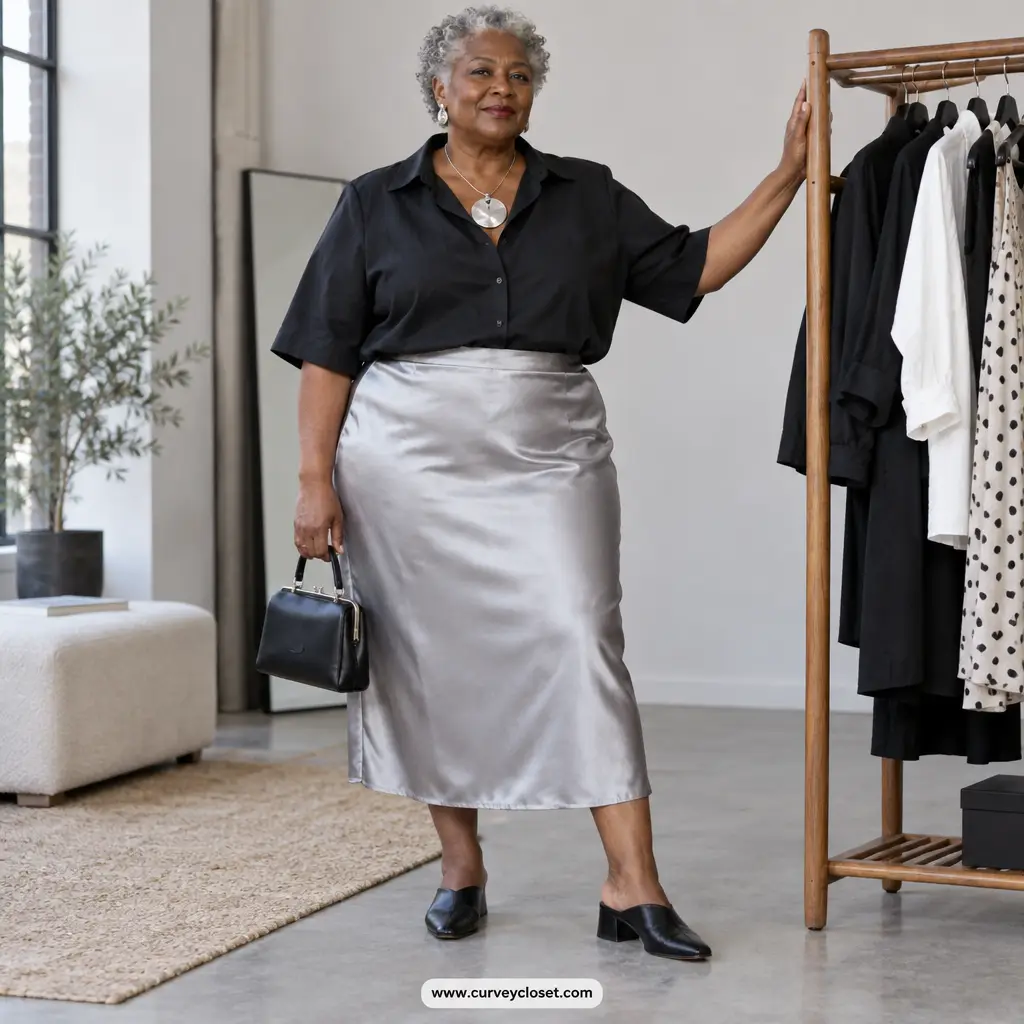
Do: Follow each garment’s care label and separate delicate satin from abrasive fabrics when laundering. Don't: Wash a satin skirt with zipped denim or apply high heat simply because its cotton top can take it. An outfit can work beautifully together while needing completely different care. Close fastenings and use a wash bag only if the skirt’s label permits machine washing; follow any hand-wash or professional-cleaning instructions instead. For creases, check whether ironing or steaming is allowed and test discreetly. Let the skirt dry fully before storing it.
How to wear it: Style a silver satin skirt with a black cotton shirt, then separate the pieces at laundry time to follow their individual care labels.
The takeaway
The best satin-skirt pairing starts with how the fabrics feel together. Check the label, test your layers in motion and give the waistband a proper seated trial. Then enjoy the contrast of satin with crisp cotton, soft knits or textured denim—on your own terms.
Get outfit ideas from your own closet
Curvy Closet picks a daily outfit from the clothes you already own.
Learn moreShare counts include shares made with the buttons on this page. Images are AI-generated illustrations.